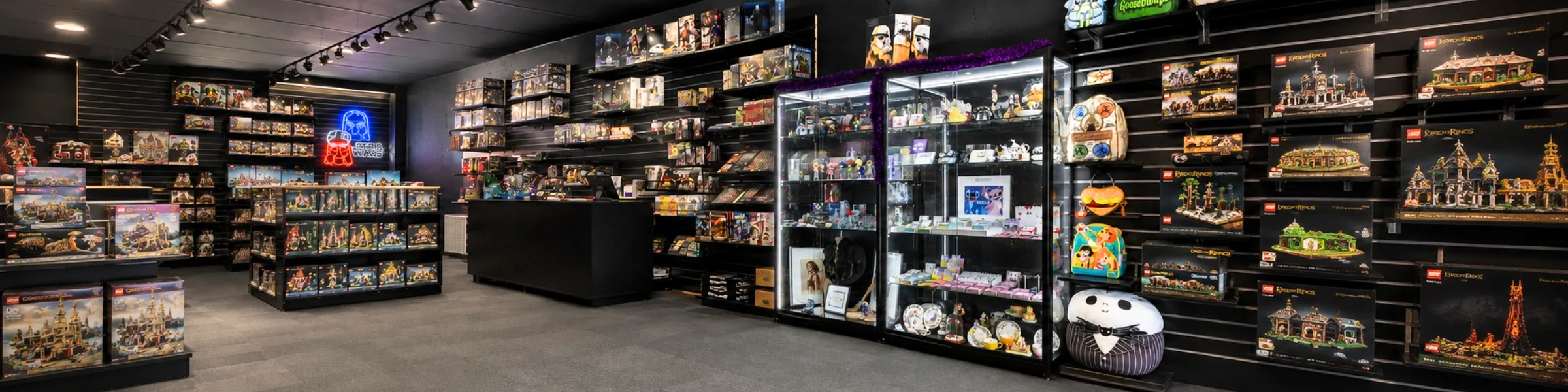
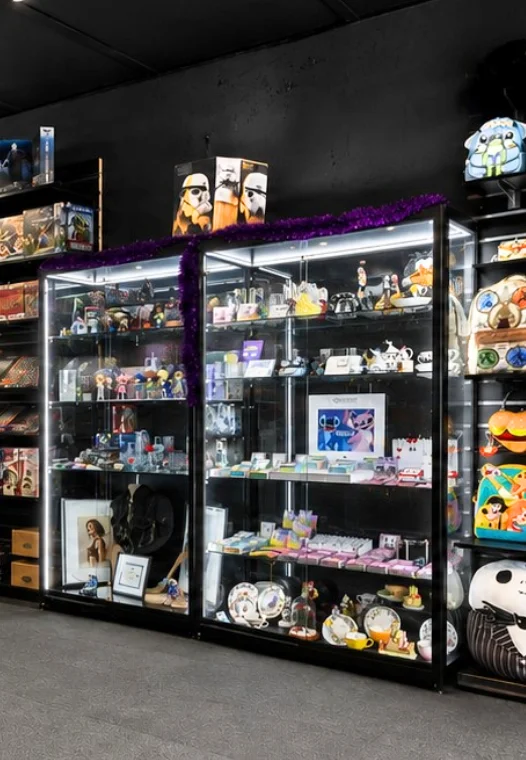
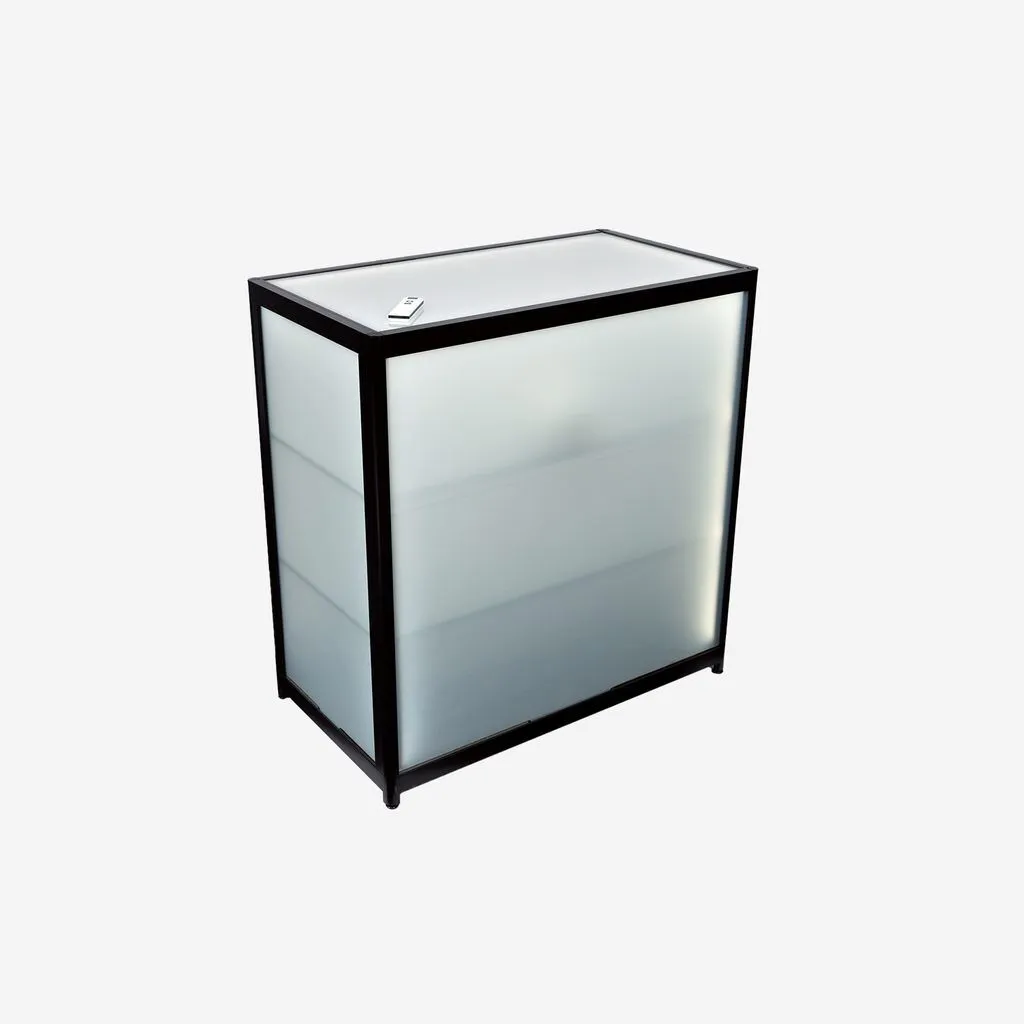
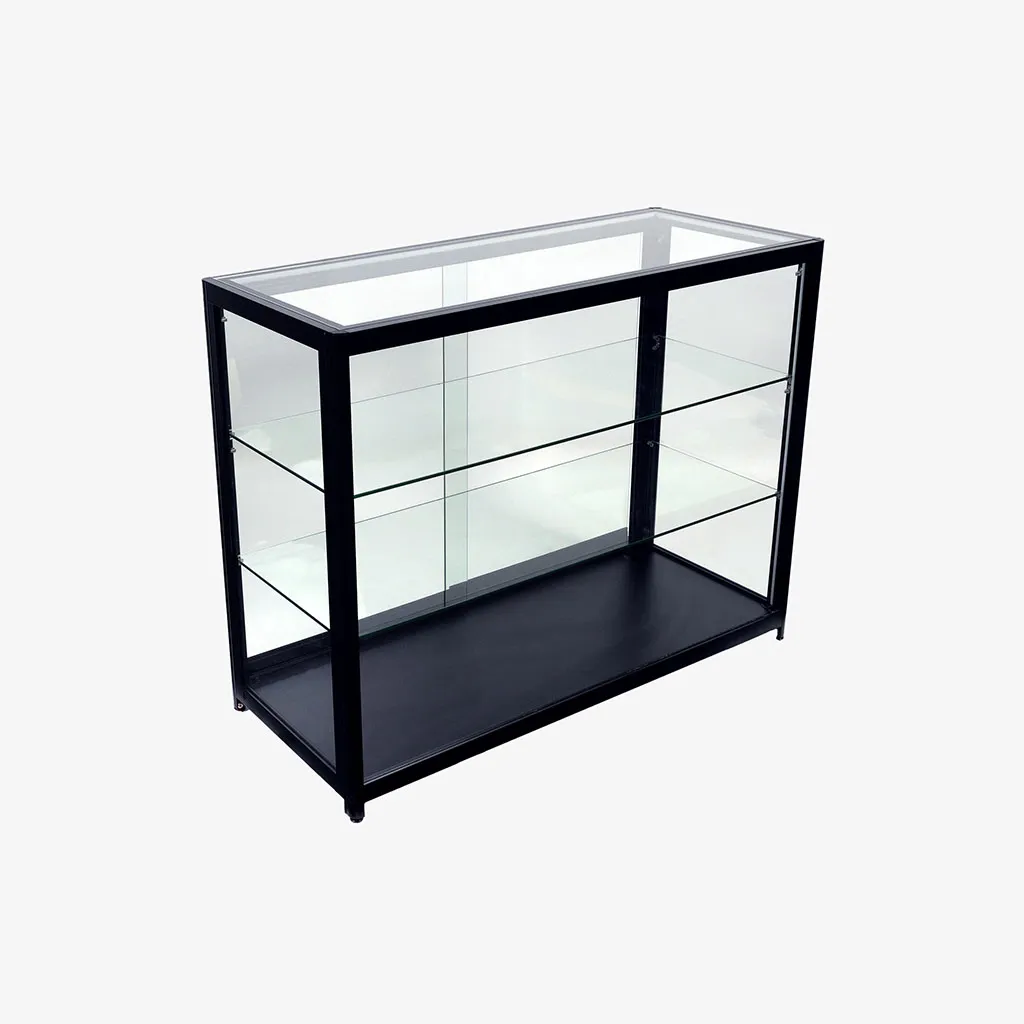
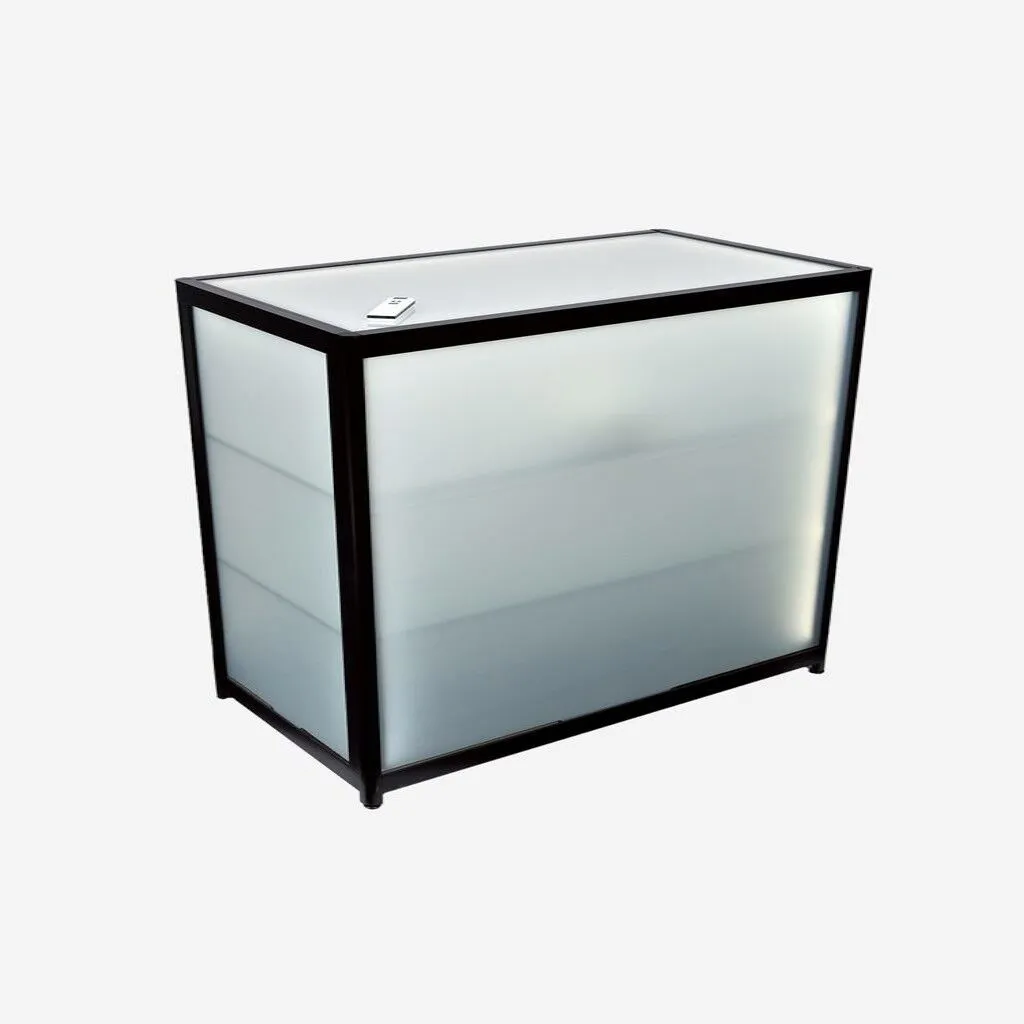
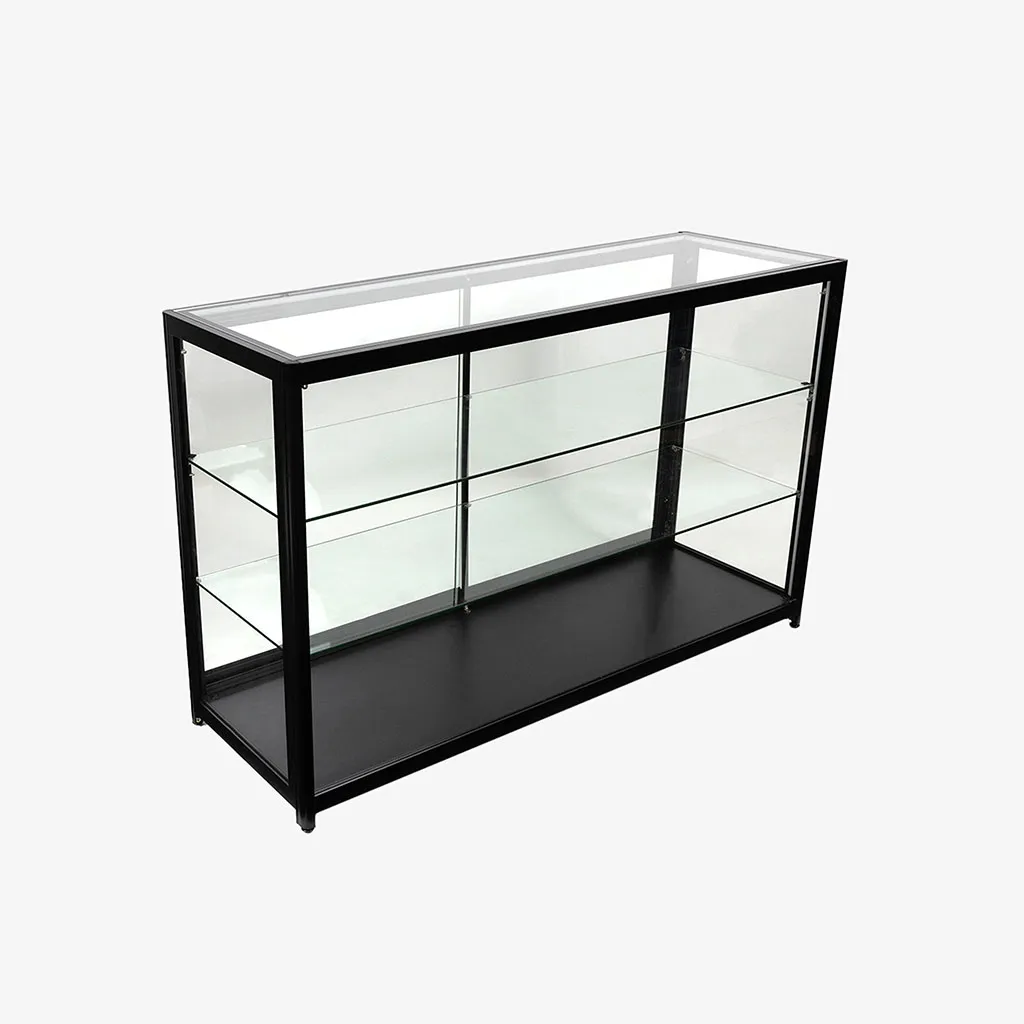
A glass display cabinet puts your merchandise front and centre. Visible from every angle, while being protected from dust and theft, a showcase cabinet presents your products in a way that immediately lifts the perceived value of whatever’s inside.
Showing all 17 results
Showing all 17 results
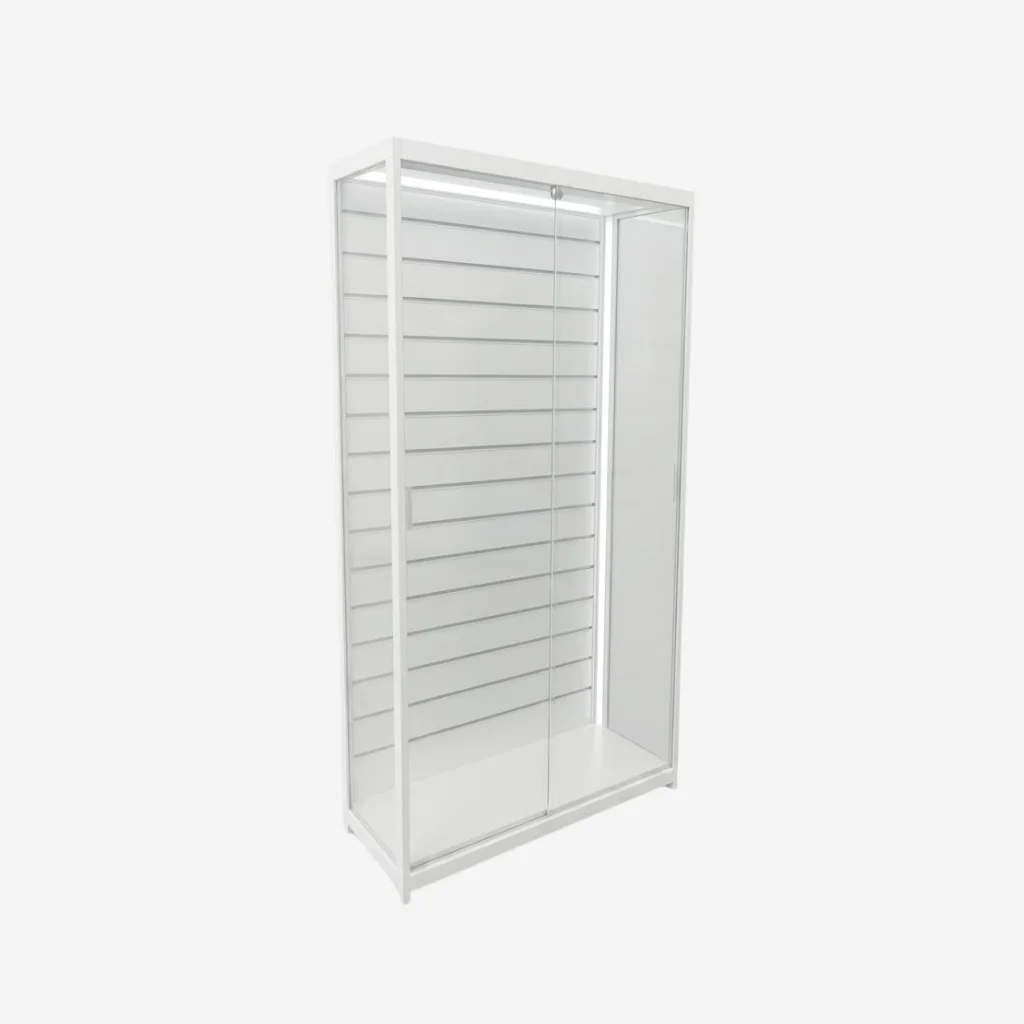
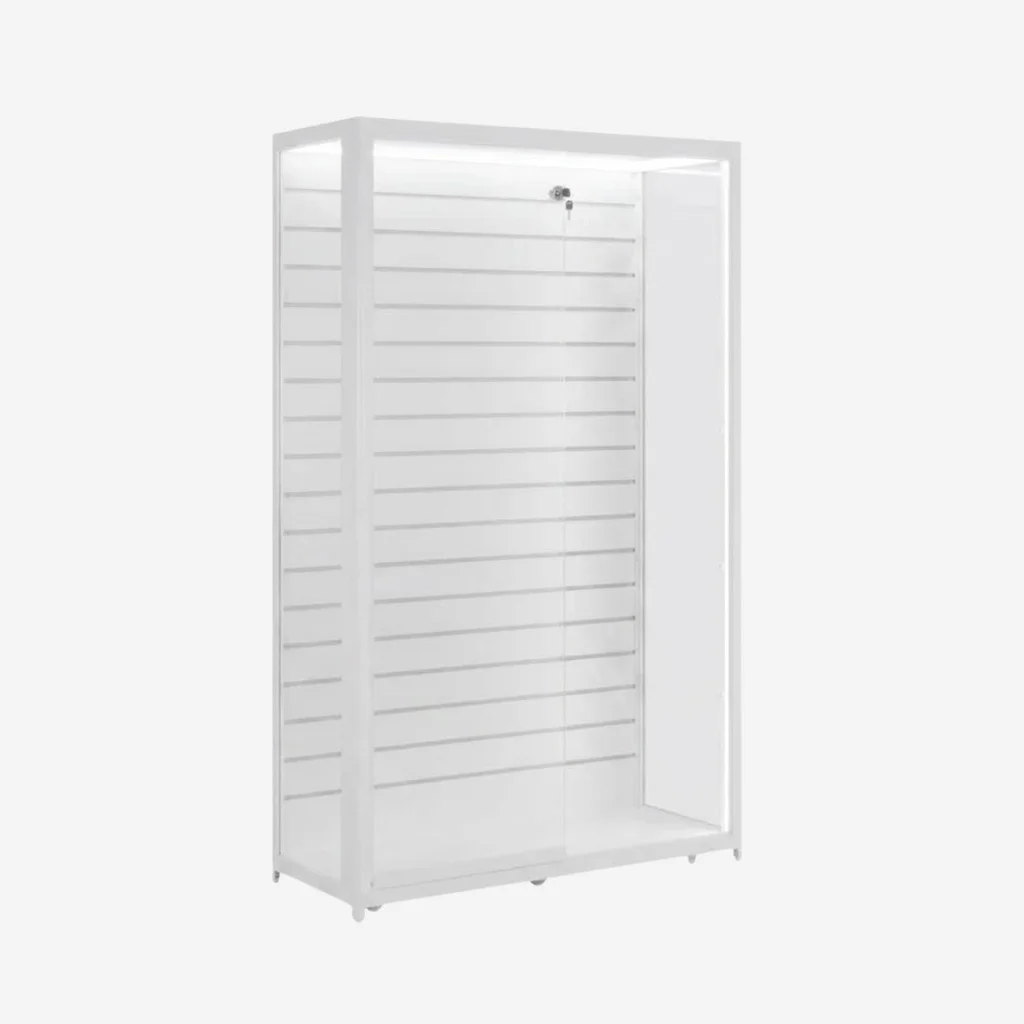
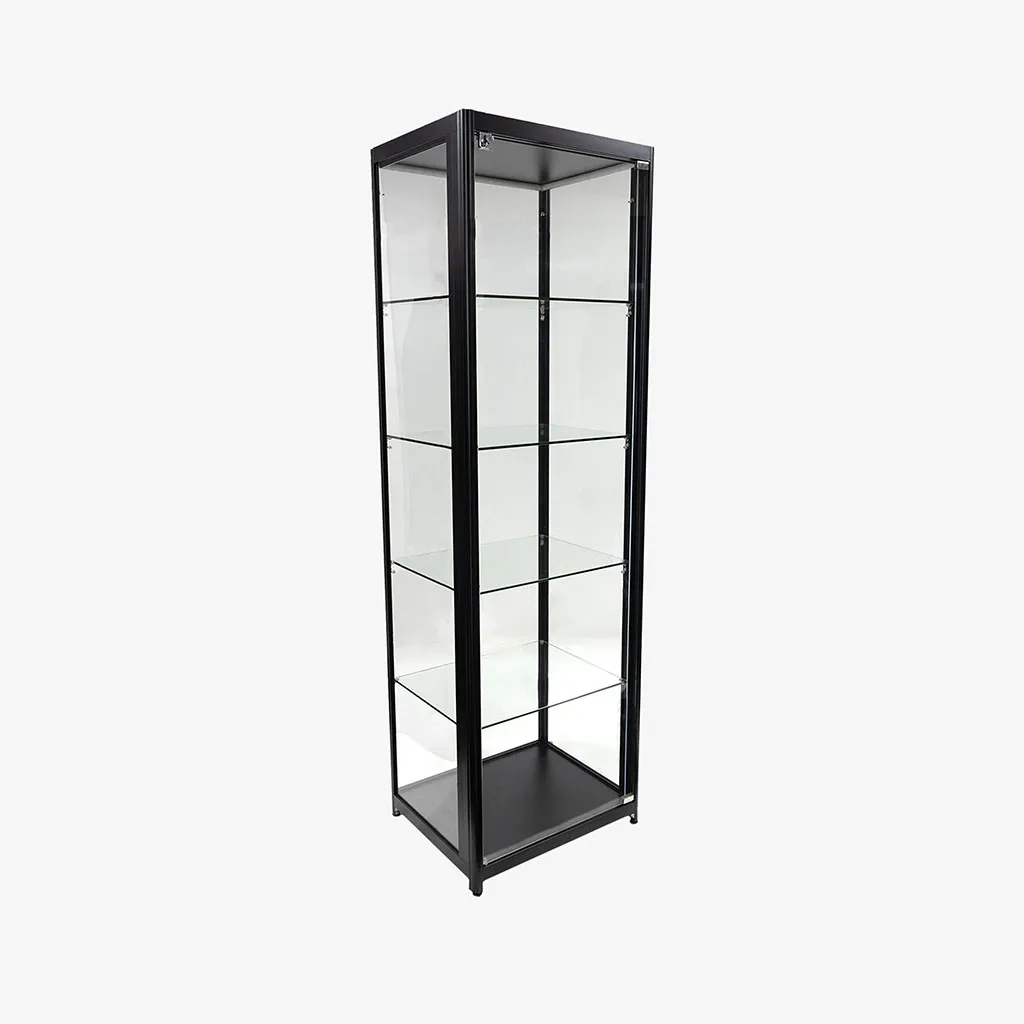
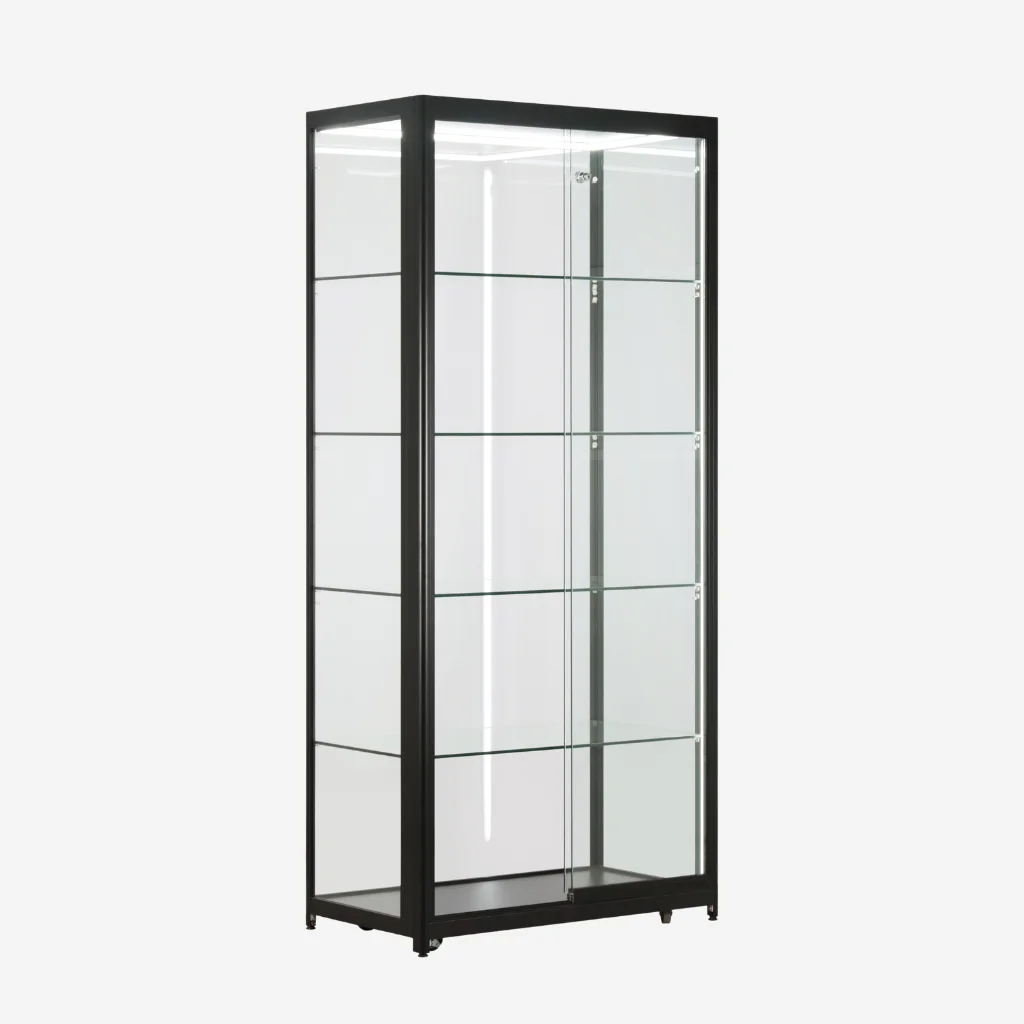



What is a Glass Display Cabinet?
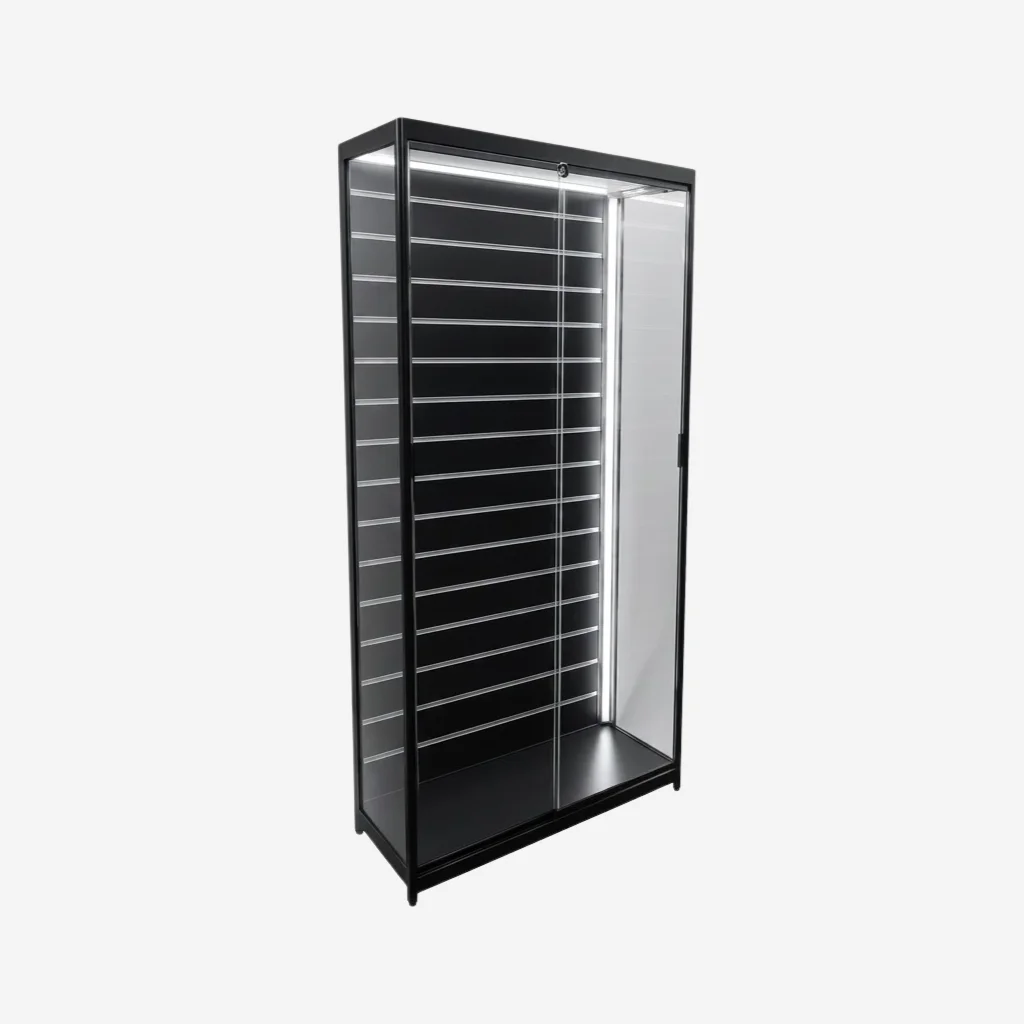
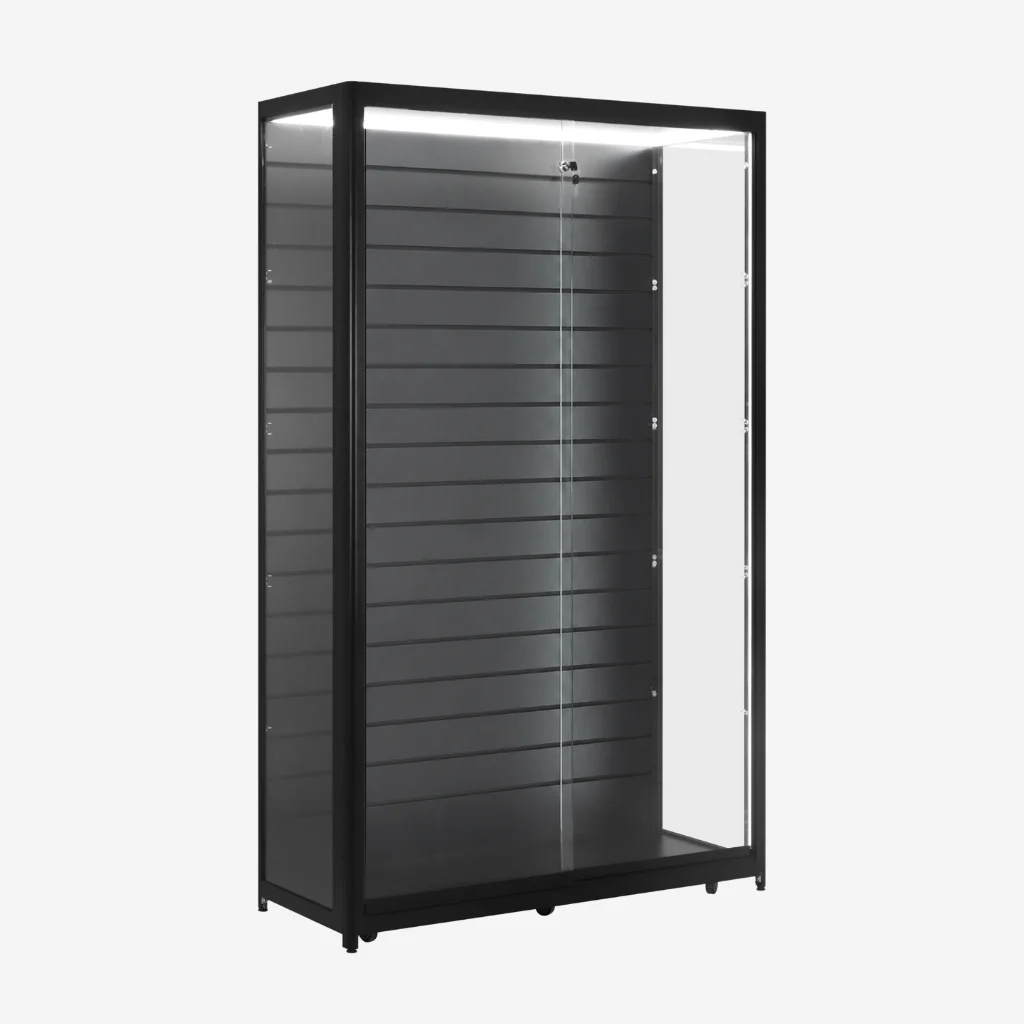
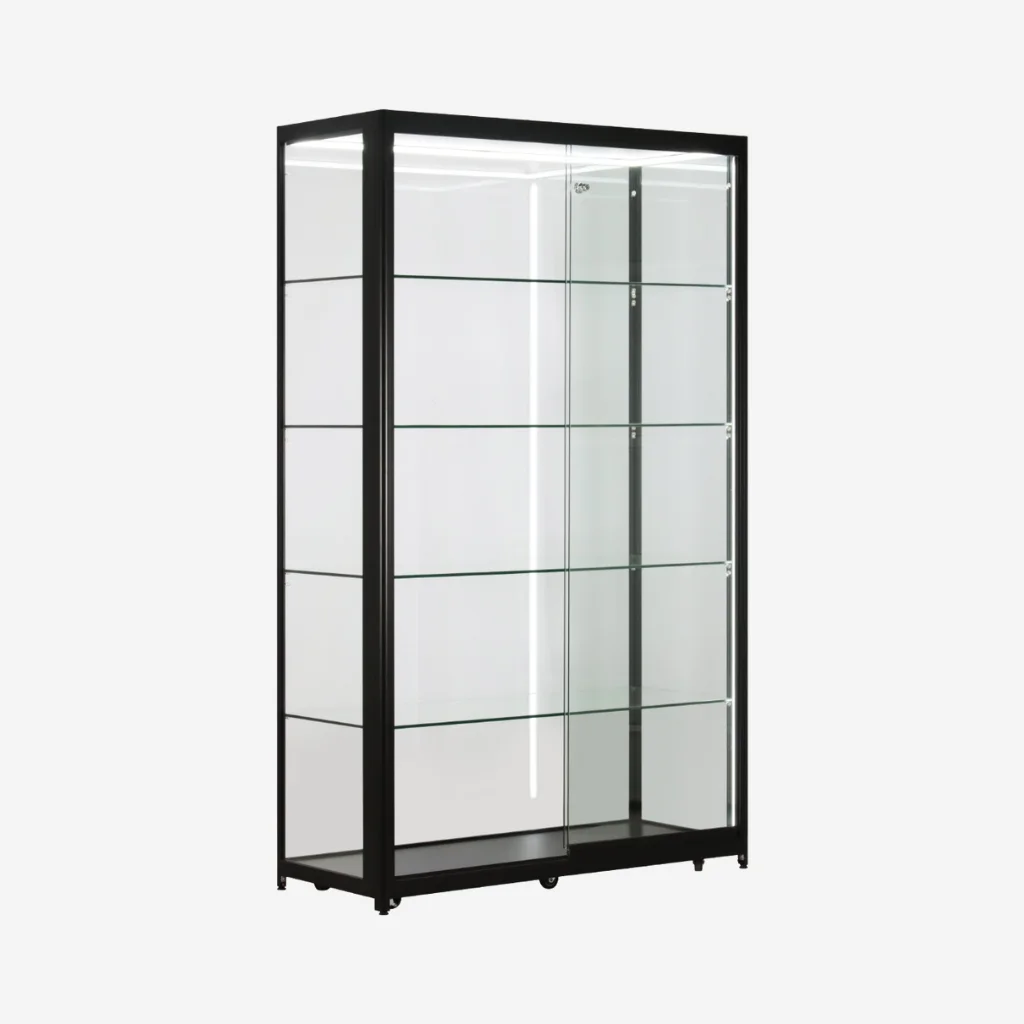
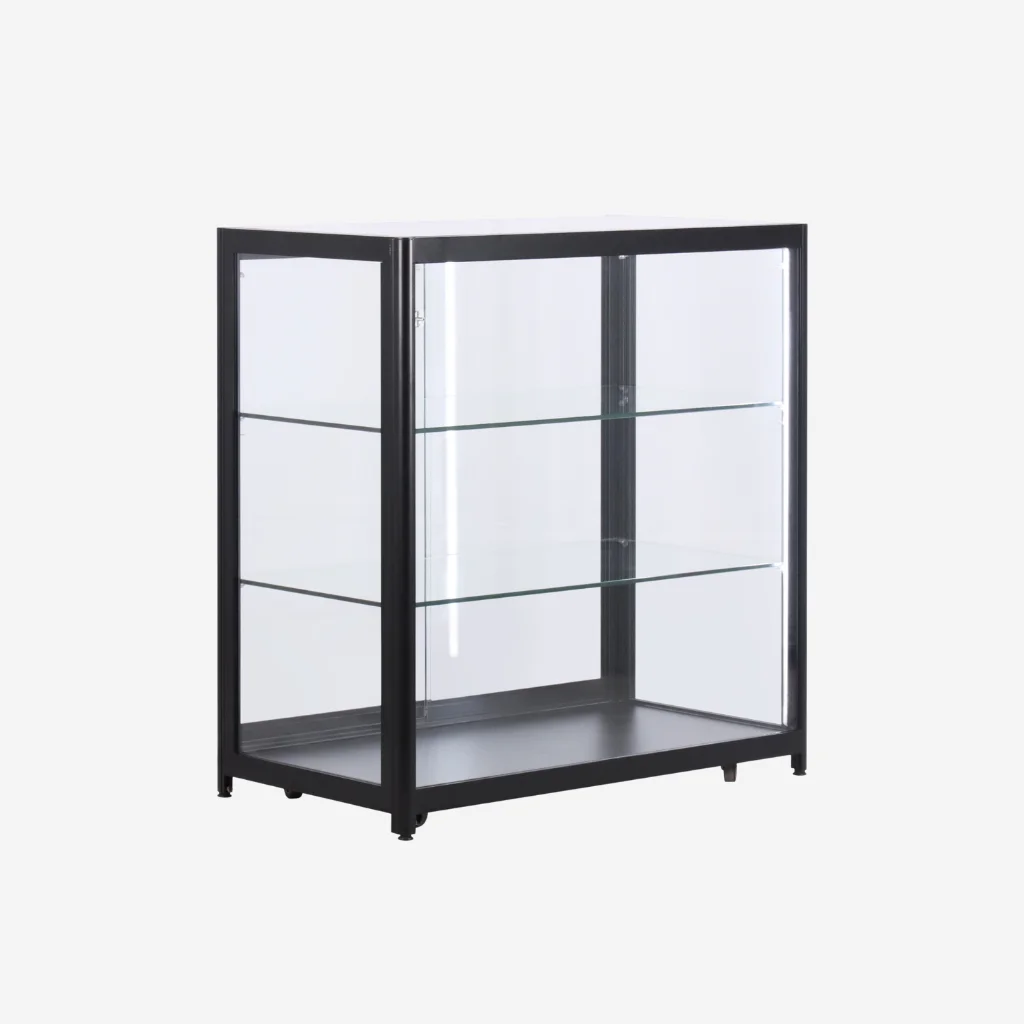
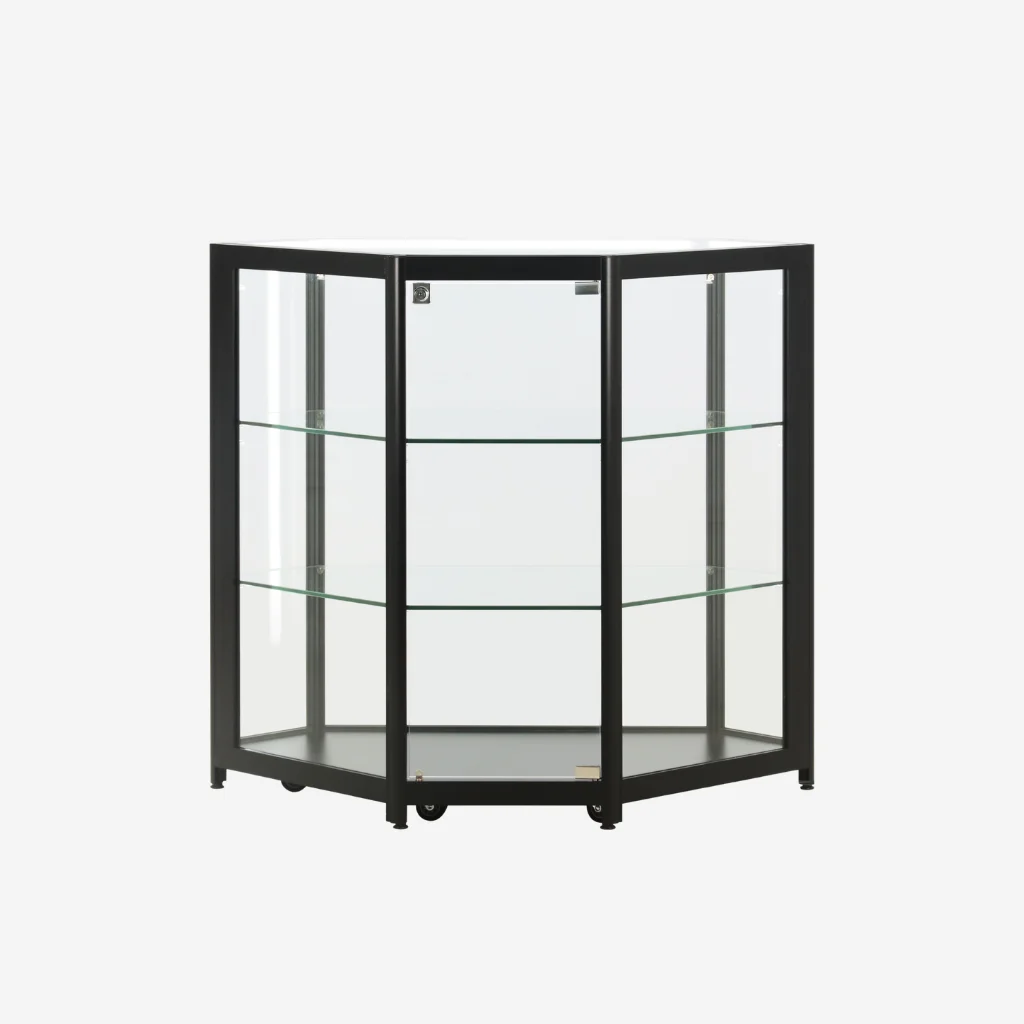
A glass display cabinet is a retail display unit built around tempered glass panels and an aluminium or steel frame, designed to showcase high-value merchandise with full visibility and optional security locking. Dinya Shopfittings stocks glass display cabinets in widths from 600mm to 1500mm, with options for integrated LED lighting, adjustable shelving, castors, and slatwall-compatible back panels, available for businesses across Australia.
A glass display cabinet is a freestanding or wall-mounted display unit that uses transparent glass panels to present products while keeping them secure and protected.
Unlike open slatwall shelving or gondola shelving, a glass cabinet encloses the merchandise, making it the right choice when security, dust protection, or premium presentation are priorities.
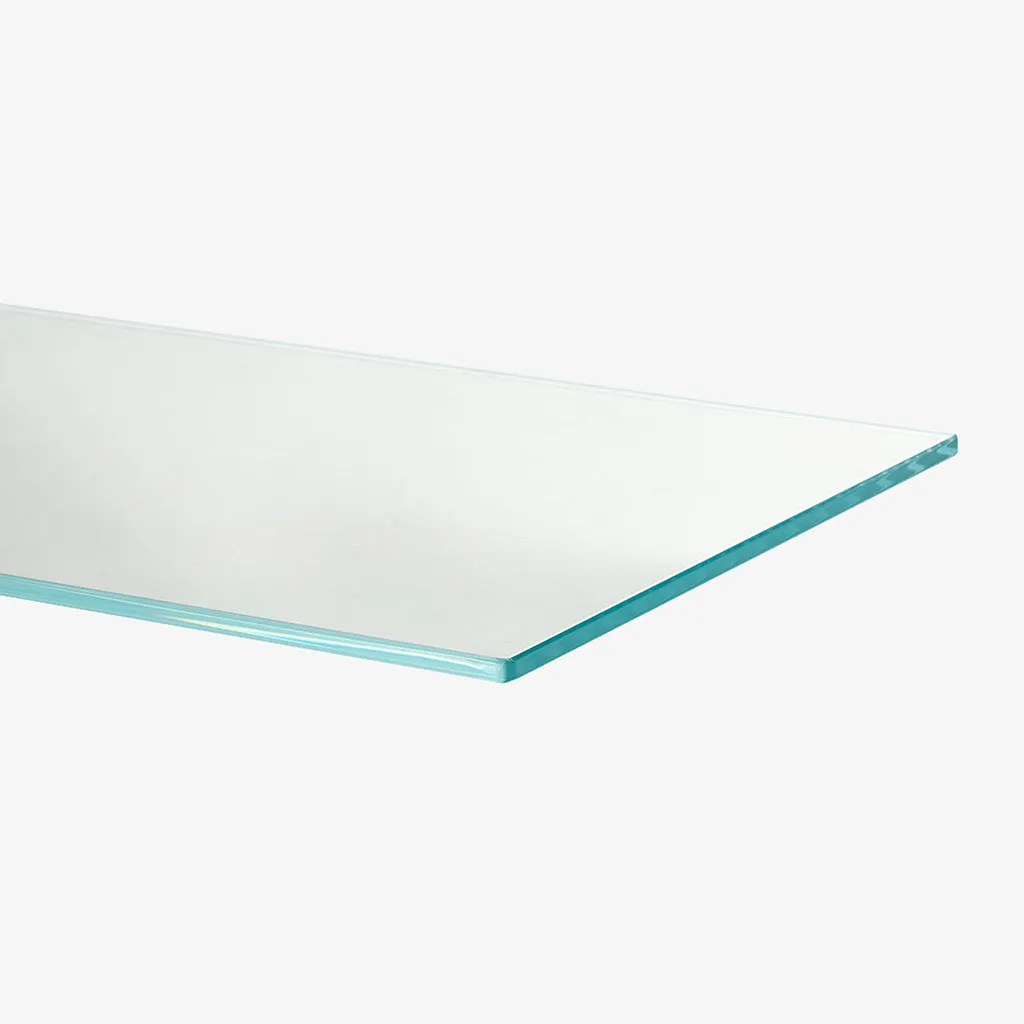
Shelves inside a glass cabinet are typically tempered and adjustable, meaning you can reconfigure the layout as your stock changes without any tools. Most units also include a locking door system, integrated LED lighting, and castors for repositioning on the shop floor.

Why Buy from Dinya Shopfittings?
Dinya has been supplying shopfittings Australia-wide since 2012. A few things that set us apart:
- Price beat guarantee: Find a like-for-like glass display cabinet priced lower anywhere in Australia, and we’ll beat it by 10%.
- Quality construction: Tempered glass and powder-coated aluminium frames as standard across the range
- Fast dispatch: Metro orders ship within 1–3 business days, regional 3–7 business days
- Custom solutions: Non-standard sizes, finishes, and configurations handled through our customised shopfitting solutions team
- Melbourne showroom: Browse the full cabinet range in person at 4/56 Chiltern St, Broadmeadows
Glass display cabinets also pair naturally with other Dinya display products. Add acrylic risers inside a cabinet to create height variation on the shelves, use acrylic shelves for a lighter alternative to glass, or complement your display with acrylic brochure holders on the counter alongside.
Real-World Retail Success Stories: How Dinya Products Improve the Retail Experience
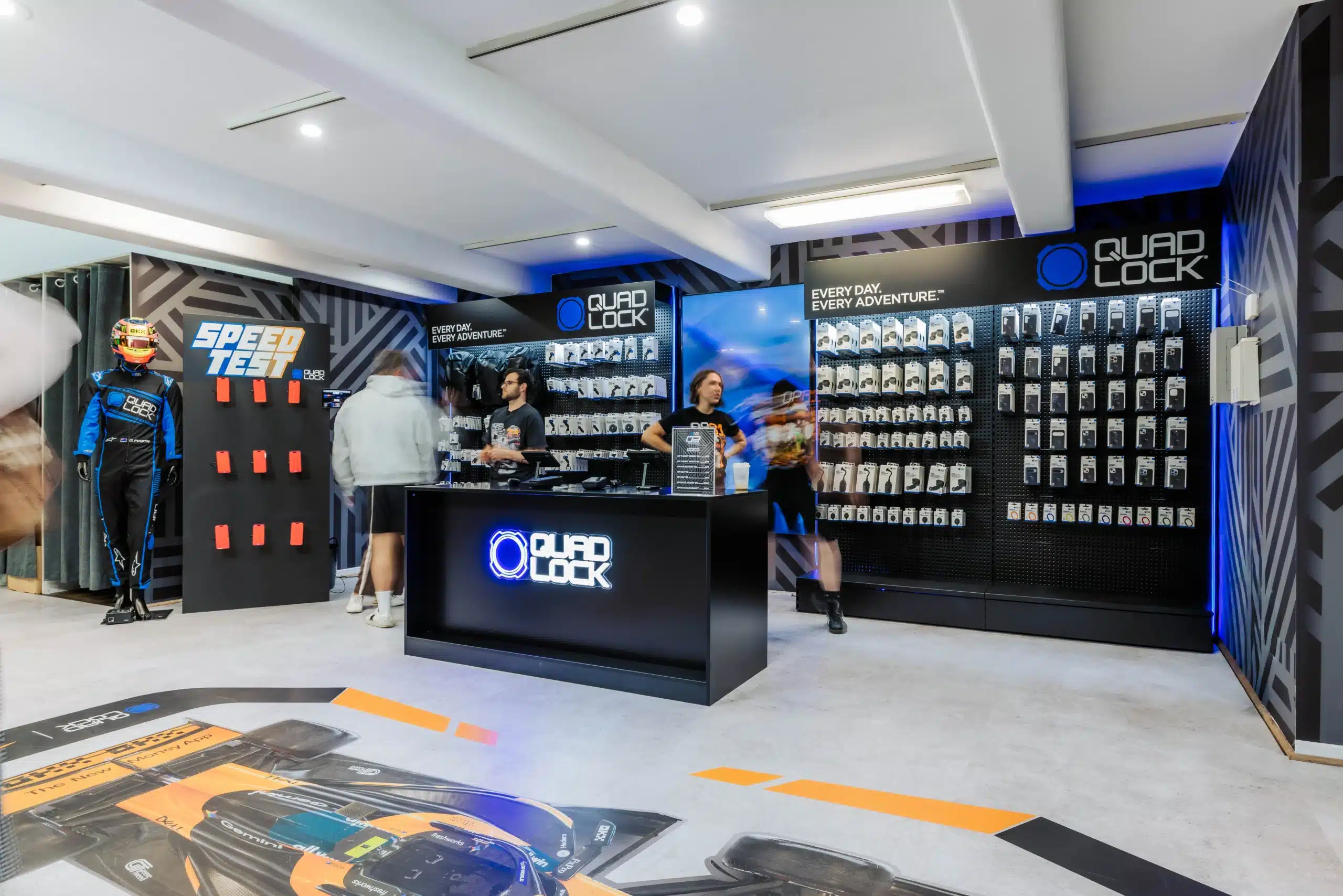
Inside the Quadlock x Oscar Piastri Home Race Pop-Up Store — Event Retail Display, Melbourne F1 Grand Prix
Dinya Shop Fittings supplied the retail display fixtures for the Quadlock x Oscar Piastri Home Race pop-up store at the Melbourne F1 Grand Prix. The fitout included black gondola shelving, a branded retail counter, and a glass display cabinet — a complete temporary retail environment delivered to a permanent commercial standard for one of Melbourne's…

3 Jul 2026
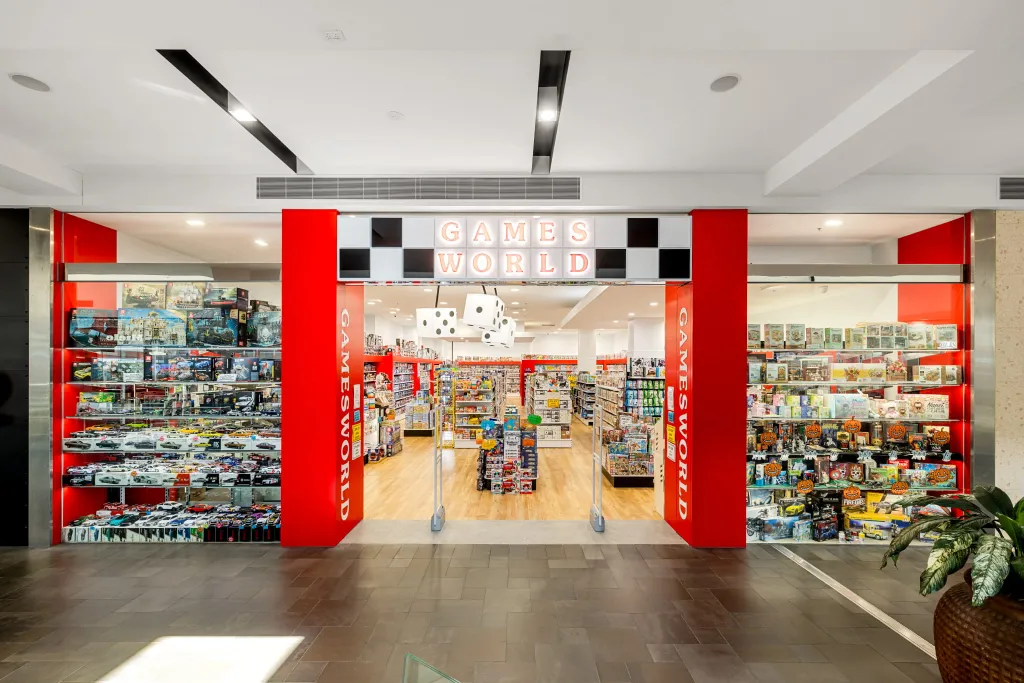
Games World Doncaster — Specialty Games and Toy Store, Melbourne Fitout Case Study
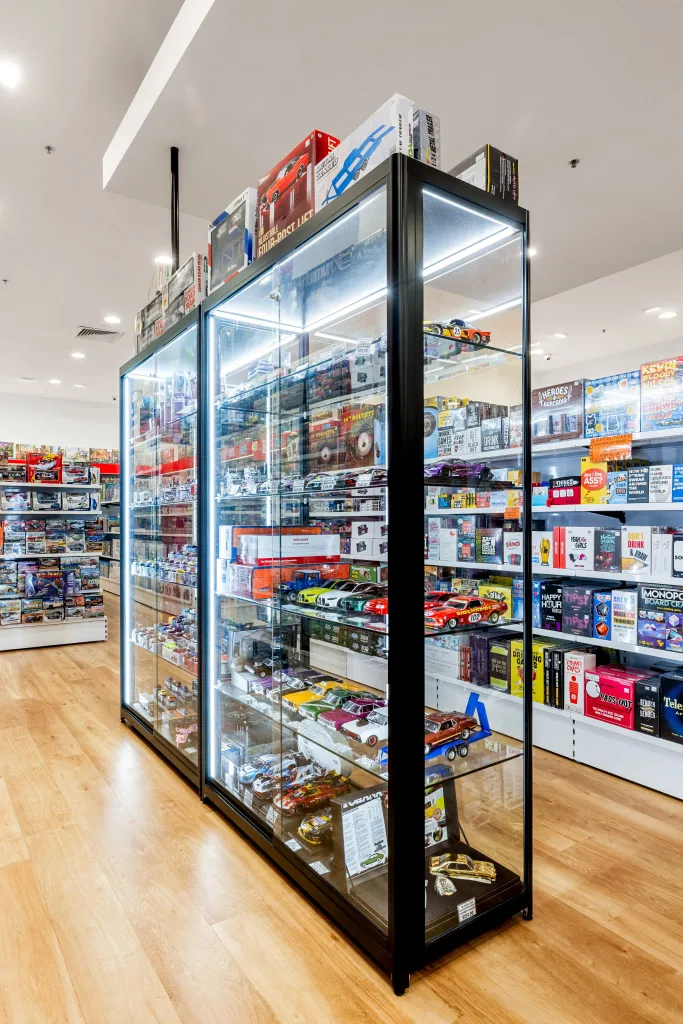
Dinya Shop Fittings supplied the retail shelving for Games World Doncaster's specialty games and toy store in Melbourne — a full store fitout using white plain panel gondola shelving and glass display cabinets, installed by Prime Shopfittings. The result is a well-organised, well-lit specialty retail space that handles a broad product range and makes browsing…
16 Jul 2026
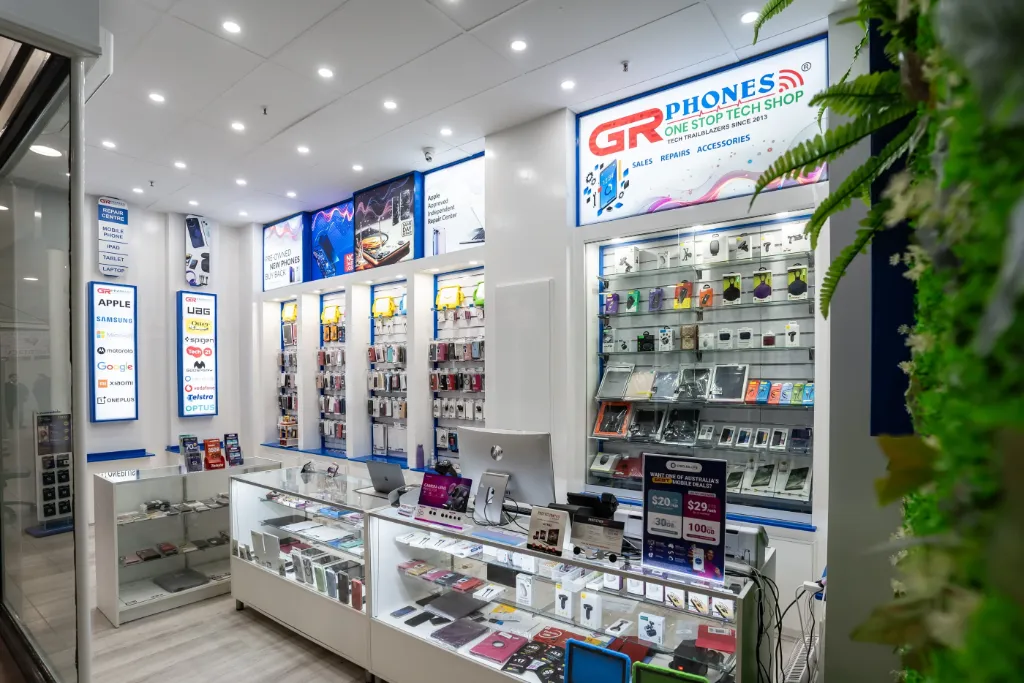
GR Phones Adelaide CBD — Phone and Accessories Retail Fitout Case Study
Dinya Shop Fittings supplied the slatwall display fitout for GR Phones in Adelaide's CBD — white slatwall panels and hooks across the full wall display area, creating a clean, flexible, high-capacity display system for a high-volume phone and accessories retail store in a competitive CBD retail environment.
17 Jul 2026
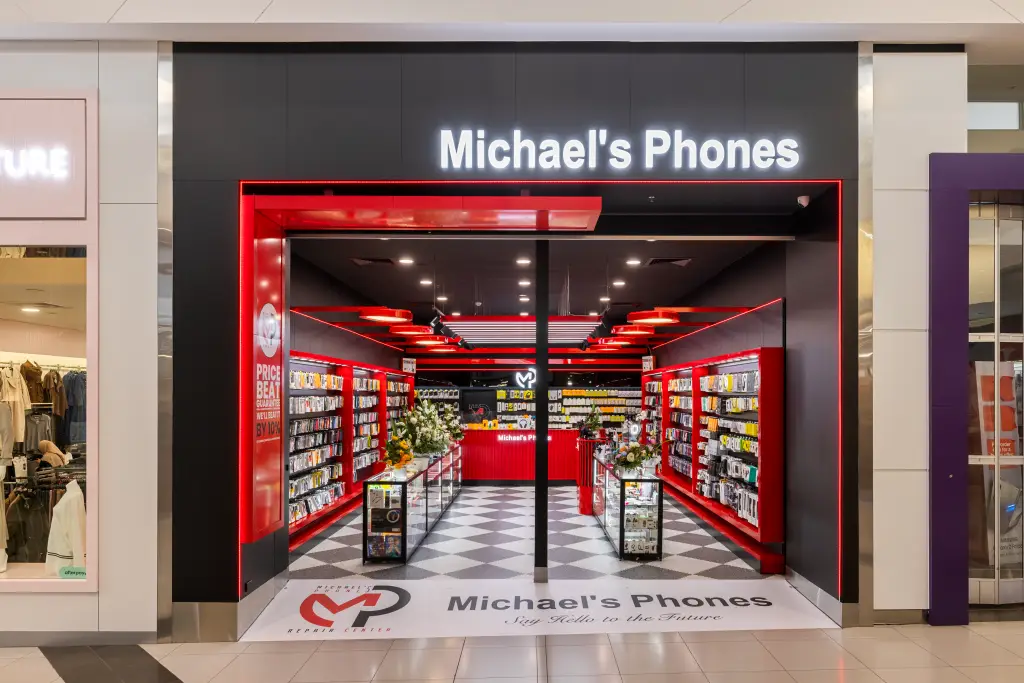
Michael’s Phones Retail Display Fitout In Broadmeadows and Roxburgh Park Melbourne Case Study
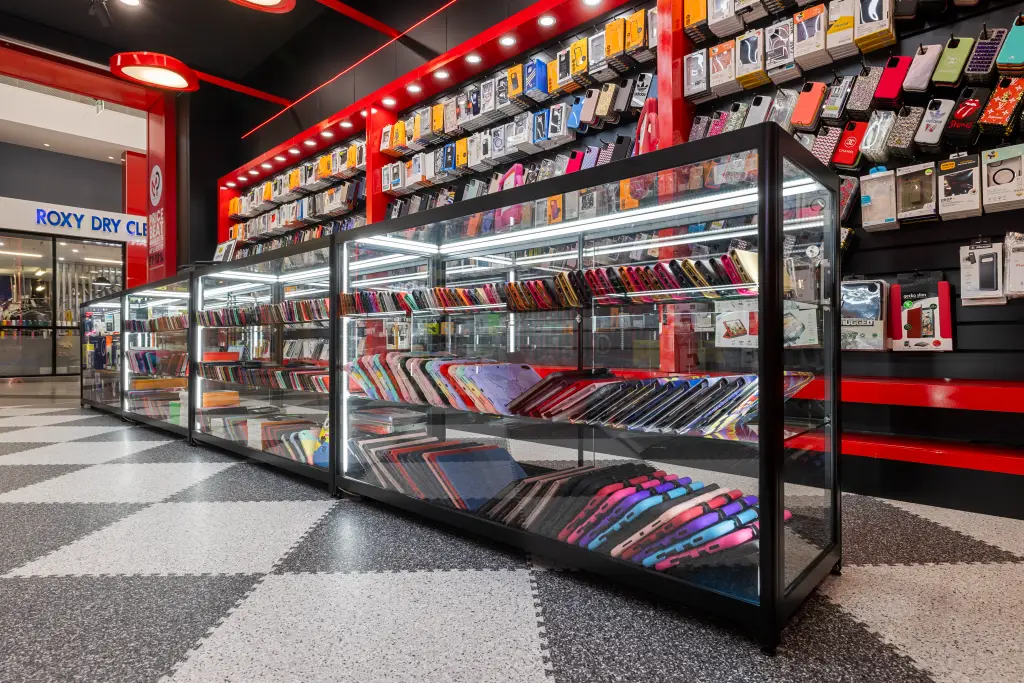
Dinya Shop Fittings supplied the retail display fitout for Michael's Phones at Broadmeadows and Roxburgh Park shopping centres in Melbourne — a consistent black slatwall panel, hook, and glass counter system across both locations, installed by a professional shopfitter. The result is a strong, brand-consistent retail presence across two separate shopping centre tenancies that carry…
30 Jul 2026
6 Types of Glass Display Cabinets
The right glass display cabinet depends on your product type, security needs and store layout. Here's a breakdown of the six main styles.
Read More Read Less
Glass Showcase Cabinet
A four-sided transparent retail unit built around an aluminium frame, designed for 360-degree product visibility. The glass showcase format is a staple in jewellery, electronics and watch retail, where customers want to see the product from every angle before committing to a purchase.
Lockable Display Cabinet
Any glass display unit fitted with a keyed cylinder lock or cam lock on the door system. A lockable display cabinet is essential for high-value merchandise that needs to be secure during and after trading hours, without sacrificing visibility.
Display Cabinet with Glass Doors and Shelves
Combines a transparent door system with internal glass shelving, used where retailers need product visibility from a single side rather than a full four-sided showcase configuration. Side and back panels can be solid, in timber, MDF or mirrored, while the doors and shelves remain glass. This format suits wall-recessed and back-bar installations.
Glass Shelving Cabinet
Uses tempered glass for both the structural shelves and the side panels, producing an almost frameless transparent column ideal for premium product merchandising. Dinya stocks both freestanding and wall-mounted glass shelving cabinets compatible with the slat wall display system.
Glassware Display Cabinet
Configured specifically to merchandise drinkware, stemware, vases and decorative glass objects. The glassware display cabinet features closer shelf spacing (180–220mm) and edge lighting that makes the contents shimmer.
Adjustable shelves mean you can move between champagne flutes, tumblers and decorative pieces without reordering.
Industrial Display Cabinet
Uses a heavy-gauge steel or powder-coated metal frame with reinforced 6–8mm tempered glass panels and heavy-duty castors rated above 100kg. The industrial display cabinet is built for warehouse showrooms, trade counters, tool displays and automotive retail.
Dinya sources steel-framed industrial units on request for heavy-duty Australian retail environments.
| Type | Frame Material | Door System | Lockable | Best For | Price (AUD) |
|---|---|---|---|---|---|
| Glass showcase cabinet | Aluminium | Sliding | Yes | Jewellery, electronics, watches | $650–$1,200 |
| Lockable display cabinet | Aluminium or steel | Sliding or hinged | Yes (always) | High-value retail, secure stock | $700–$1,400 |
| Cabinet with glass doors and shelves | Aluminium, MDF, timber | Hinged or sliding | Optional | Pharmacy, optical, perfume | $550–$1,100 |
| Glass shelving cabinet | Frameless or aluminium | Sliding or open | Optional | Galleries, premium spirits | $700–$1,500 |
| Glassware display cabinet | Aluminium | Hinged | Optional | Bottle shops, homewares | $600–$1,200 |
| Industrial display cabinet | Steel | Sliding or hinged | Yes | Trade, automotive, hardware | $900–$1,800 |
Glass Display Cabinet Materials and Construction
Glass Types
Three glass types appear in retail display cabinets: tempered, annealed and laminated.
Australian retailers default to tempered glass for shelves and doors because of the AS/NZS 2208 safety standard. It's significantly stronger than annealed glass and breaks into small, blunt fragments rather than sharp shards.
Laminated glass adds $80–$150 per panel and applies only to high-security applications. You'll find tempered glass used throughout the Dinya glass display shelves range.
Frame Materials
Four frame materials dominate the Australian shopfitting market: aluminium extrusion, cold-rolled steel, MDF with melamine, and solid timber.
The choice affects price by roughly 40% across the range. Aluminium is the default for boutique retail, steel suits trade and industrial settings, and timber suits heritage and high-end environments.
Glass Display Cabinet Dimensions and Sizes
Most Australian retail cabinets follow a standard 500mm depth and 1980mm height, with width as the main variable.
| Width | Depth | Height | Shelf Count | Footprint | Best For |
|---|---|---|---|---|---|
| 900mm (35.4") | 500mm | 1980mm | 4 | 0.45 m² | Small boutiques, kiosks |
| 1200mm (47.2") | 500mm | 1980mm | 4 | 0.60 m² | Mid-size retail, jewellery |
| 1500mm (59.0") | 500mm | 1980mm | 4 | 0.75 m² | Large retail, electronics |
If none of these fit your space exactly, Dinya's customised shopfitting solutions can accommodate non-standard dimensions.
Key Features to Look For
LED Lighting
Integrated LED strip modules positioned along the top frame and inside the front edge produce 400–800 lumens per metre at 4000–6000K. High CRI lighting raises the perceived value of products and eliminates the shadows that make merchandise look flat.
Adjustable Shelving
Peg-and-hole or slot-and-bracket mounting at 25mm vertical increments lets you reconfigure four internal shelves without tools as your merchandise changes.
Locking Mechanism
Either a sliding-door cylinder lock or a hinged-door cam lock, with both rated to AS 4145.2 for retail use. A lockable display cabinet gives staff and customers confidence that stock is secure overnight.
Castors and Levelling Legs
Most cabinets ship with 50–100mm castors plus four levelling legs, giving roll-and-park flexibility on showroom floors that are rarely perfectly level.
Applications by Industry
A glass display case suits any retail environment where product security and presentation need to work together.
- Jewellery stores: the glass showcase cabinet is the industry standard, allowing customers full visibility while keeping stock locked and protected.
- Electronics and mobile phone retail: lockable cabinets protect high-theft items without obscuring them from browsers.
- Pharmacy and chemist: a cabinet with glass doors and shelves keeps premium skincare, optical and regulated products visible but secure. Pairs well with pharmacy shelving solutions for a complete floor plan.
- Supermarkets and convenience stores: counter-height glass display cases work at the point of sale alongside supermarket shop fittings for impulse-purchase categories.
- Museums and collectibles: the frameless glass shelving cabinet suits gallery-style displays where the fixture should disappear and the object should shine.
Glass Display Cabinet Price Range in Australia
| Price Band (AUD) | Frame Type | Typical Width | Features Included | Best For |
|---|---|---|---|---|
| $350–$650 | MDF + glass | 600–900mm | Basic shelf, hinged door | Entry-level boutique, market stall |
| $650–$1,200 | Aluminium | 900–1500mm | LED, lock, castors | Most Australian retail |
| $1,200–$1,800 | Steel | 1200–1500mm | Heavy-duty, industrial | Trade, hardware, automotive |
| $1,800–$3,500 | Timber | Custom | Bespoke finish, museum-grade | Heritage retail, museums |
How to Choose a Glass Display Cabinet
The right cabinet comes down to a handful of factors: the products you're displaying (their size, value and security needs), your available floor space, how many shelves you need, and whether the unit will double as a service counter. Work through these five steps before ordering.
- Measure the available floor space. Width is the key variable; most cabinets are 500mm deep and 1980mm tall. If the unit will also serve as a service counter, factor in staff working space behind it as well.
- Rank your security requirement. Consider the value of the products on display. High-value stock needs a keyed lockable display cabinet; lower-risk items can use an open or unlocked unit.
- Calculate shelf count and maximum load. Work out how many shelves your product range needs, then check the weight. Tempered glass shelves in the standard range handle up to 20kg per shelf; heavier stock needs the industrial frame.
- Specify the back panel and finish. All of our units include COB LED lighting as standard, so bright, professional product presentation is built in, ideal for jewellery and cosmetics. A mirrored back panel adds depth for smaller units.
- Match the price band to your budget. Entry-level MDF-and-glass units start from $350; aluminium showcase cabinets for most retail applications sit between $650 and $1,200.
Still unsure? Our team is happy to help you select the right cabinet or counter for your retail setup.
Glass Display Cabinet vs Other Retail Display Solutions
Not every product needs a glass cabinet. Here's how it compares to the other main retail display formats.
| Display Format | Product Visibility | Security | Setup Cost (AUD) | Best For |
|---|---|---|---|---|
| Glass display cabinet | 360° transparent | High (lockable) | $650–$1,200 | Jewellery, electronics, pharmacy |
| Slatwall shelving | Open-front | Low | $200–$500 | Apparel, accessories |
| Gondola shelving | Open both sides | Low | $400–$900 | Supermarket, grocery, convenience |
| Retail counter | Glass front | Medium (counter staffed) | $700–$1,400 | Point-of-sale, jewellery |
Ready to Find Your Perfect Display Cabinet?
Whether you need a single glass showcase for a boutique counter or a full run of cabinets for a retail fit-out, we're here to help you get it right. Browse the range above, get in touch with our team, or visit our Melbourne showroom to see the cabinets in person before you order.
Phone: 1300 758 925 | Mon–Fri 9am–5pm, Sat 9am–12pm
Frequently Asked Questions
Yes. All Dinya glass display cabinets use tempered glass that meets AS/NZS 2208, the Australian standard for safety glazing. Tempered glass is significantly stronger than standard glass and, if it does break, fractures into small blunt pieces rather than sharp shards.
A well-maintained aluminium-framed glass cabinet will last 10–15 years in a standard retail environment. The main wear points are the castors and the lock cylinder, both of which can be replaced without replacing the whole unit.
Most units can be assembled by one person, but a second set of hands makes it significantly easier, particularly when lifting and aligning the glass panels. Dinya provides assembly instructions with every cabinet, and the Melbourne showroom team is happy to talk you through the process.
Whichever you'd prefer. Many customers assemble the units themselves, as pre-assembled delivery costs more. If you'd prefer pre-assembled, simply select that option at the checkout.
A glass display case is a broad term covering any enclosed display unit with glass panels. A showcase cabinet typically refers specifically to a four-sided aluminium-framed unit with 360-degree visibility, the style most commonly used in jewellery and electronics retail. All showcases are glass display cabinets, but not all glass display cabinets are showcases.
- Search Recommendations:
-
No Recommended Search Found
-


- Shopfittings By Range
- Acrylic Display
- Black on Black Series
- Clearance
- Clothes Racks
- Glass Display Cabinets
- Glass Shelves
- Gondola Display Shelving
- Double Sided Plain Panel Gondola Shelving Modules
- Double Sided Slatwall Gondola Shelving Modules
- Double Sided Volcano Pegboard Gondola Shelving Modules
- Single Sided Metal Slatwall Gondola Shelving Modules
- Single Sided Plain Panel Gondola Shelving Modules
- Single Sided Volcano Pegboard Gondola Shelving Modules
- Gondola Display Shelving Components
- Gondola Shelving Accessories

- Hanging Accessories
- Pegboards
- Pegboard Hook & Accessories
- Shop Counters
- Slatwall and Pegboard Baskets
- Slatwall Accessories
- Slatwall Extrusions and Trims
- Slatwall Gondolas
- Slatwall Hooks
- Slatwall Panels
- Slatwall Shelving and Brackets
- Wood Slat Wall
- New Products
- Shopfittings By Industry
- Inspiration & Ideas
- Dinya Digital
- Resources
- Custom Shopfitting Solutions
- Case Studies
- Blogs
- About Us
- Contact Us