Showing 25–44 of 44 results
Showing 25–44 of 44 results




Real-World Retail Success Stories: How Dinya Products Improve the Retail Experience
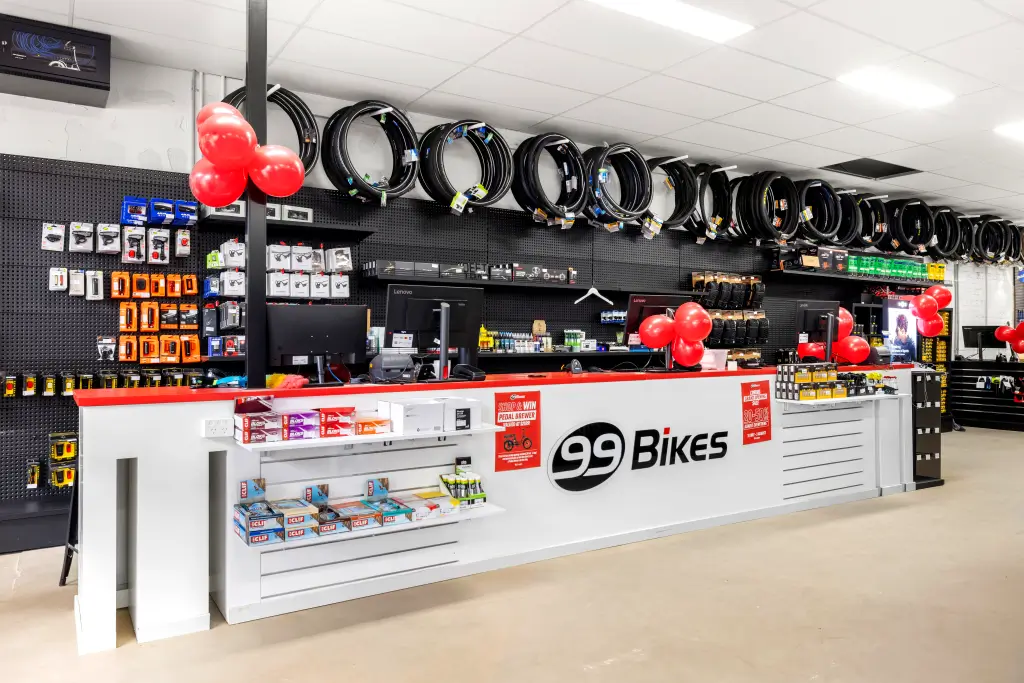
How Dinya Shop Fittings Supplied the Full Retail Fitout for 99 Bikes Coburg
Dinya Shop Fittings successfully delivered a full-scale retail shop fitout for 99 Bikes Coburg, one of Australia’s leading specialty bicycle retailers. The project included gondola shelving, slatwall panels, counters, pegboard workshop walls, hooks, and complete display systems designed to support a high-density, high-performance retail environment.

10 Jun 2026
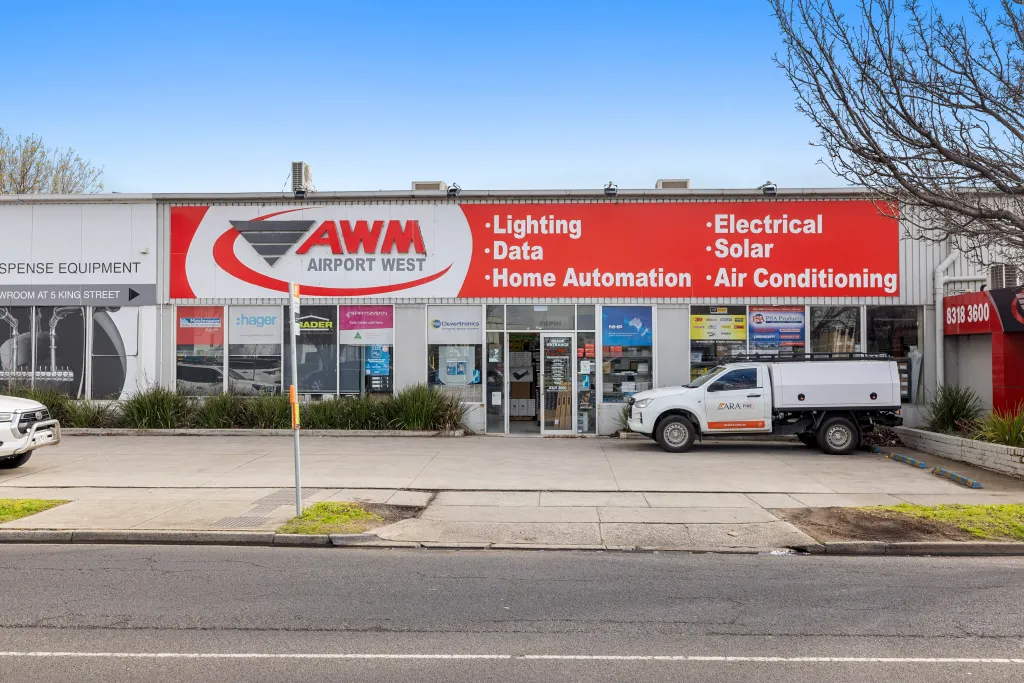
AWM Airport West Melbourne – Trade Warehouse Shelving Fitout Case Study
Dinya Shop Fittings supplied the gondola shelving fitout for AWM Airport West's trade and wholesale warehouse in Melbourne's northwest. The fitout used volcano board gondola shelving, adjustable shelves, data strips, and hooks throughout — giving the warehouse a professional, high-capacity display layout that trade customers can navigate quickly and staff can maintain without difficulty.
10 Jul 2026
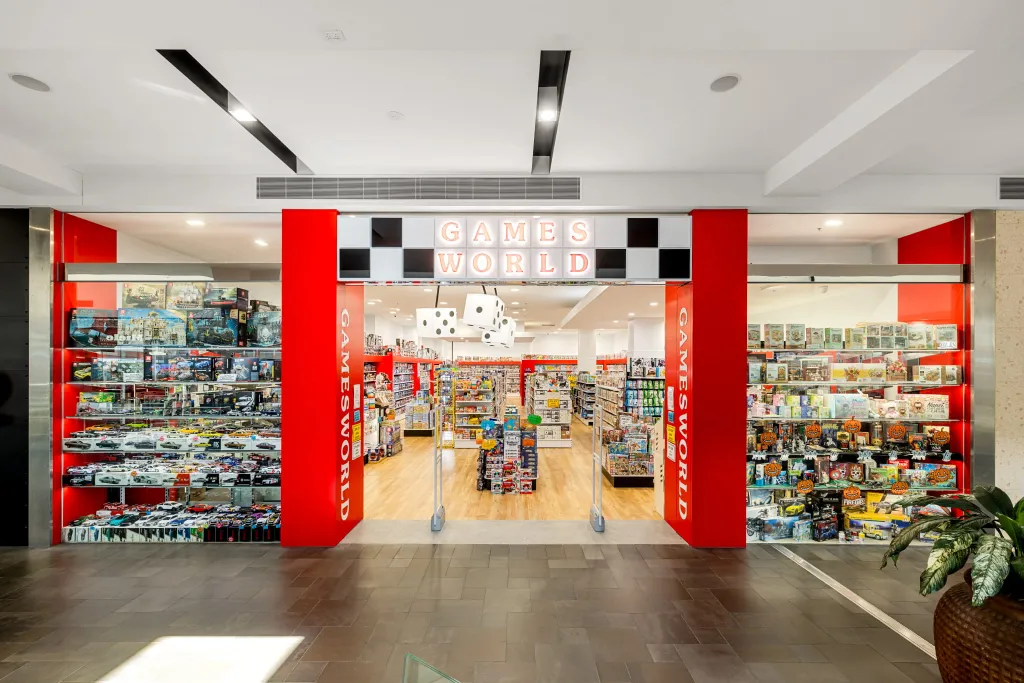
Games World Doncaster — Specialty Games and Toy Store, Melbourne Fitout Case Study
Dinya Shop Fittings supplied the retail shelving for Games World Doncaster's specialty games and toy store in Melbourne — a full store fitout using white plain panel gondola shelving and glass display cabinets, installed by Prime Shopfittings. The result is a well-organised, well-lit specialty retail space that handles a broad product range and makes browsing…
16 Jul 2026
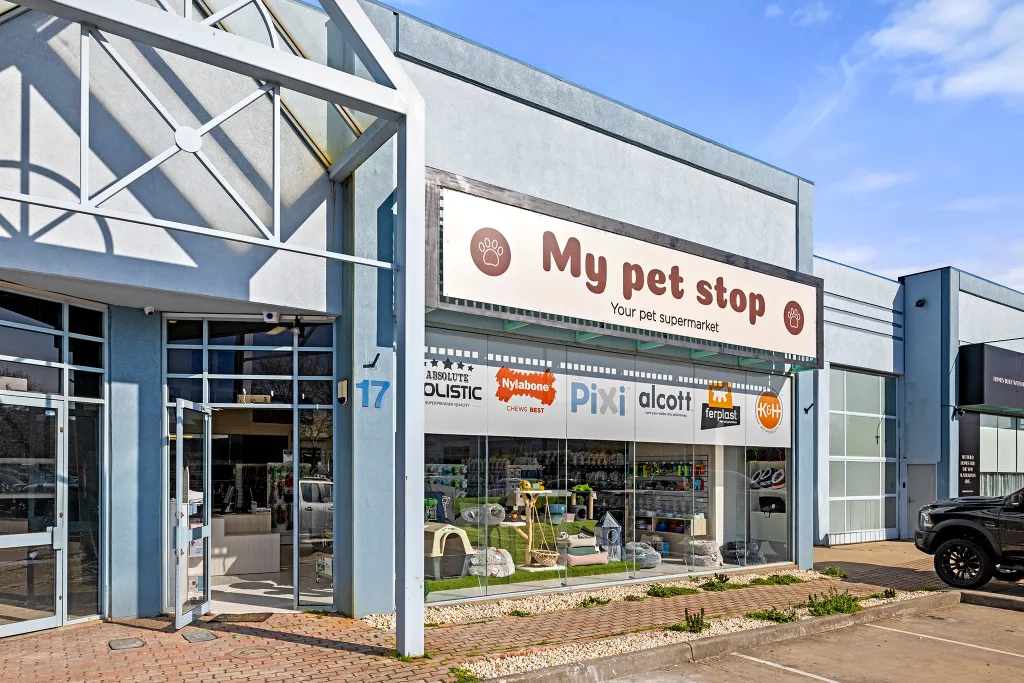
My Pet Stop Gladstone Park – Pet Supermarket Display Case Study
Dinya Shop Fittings supplied the complete retail shelving fitout for My Pet Stop in Gladstone Park, Melbourne — white gondola shelving, slatwall H-frame gondolas, and hooks across the full store floor. The combined system handles a broad pet supermarket product range across every format — from large bags of food to small hanging accessories —…
7 Aug 2026
Types of Pegboard Hooks
Not all pegboard pegs are the same. The hook style you need depends on what you're hanging, how heavy it is, and how you want it to read on the display.
Read More Read Less
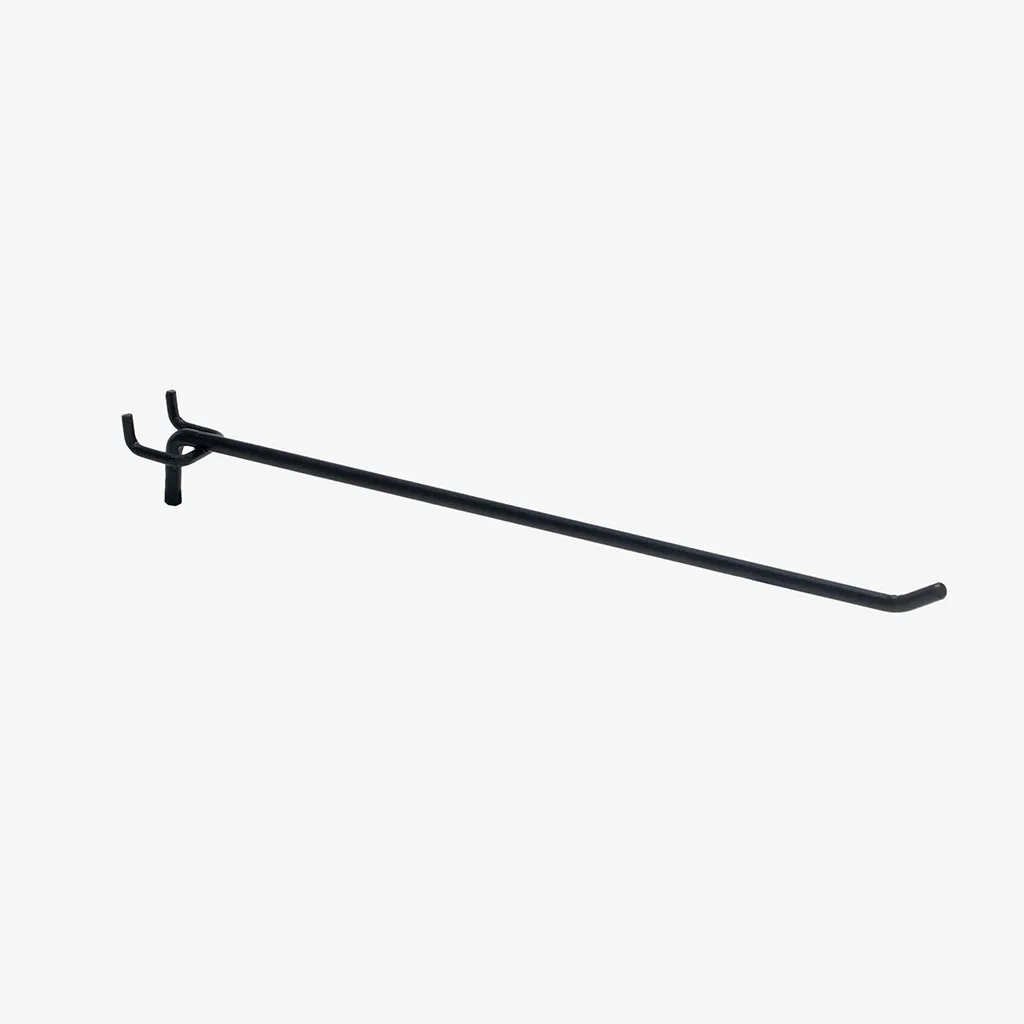
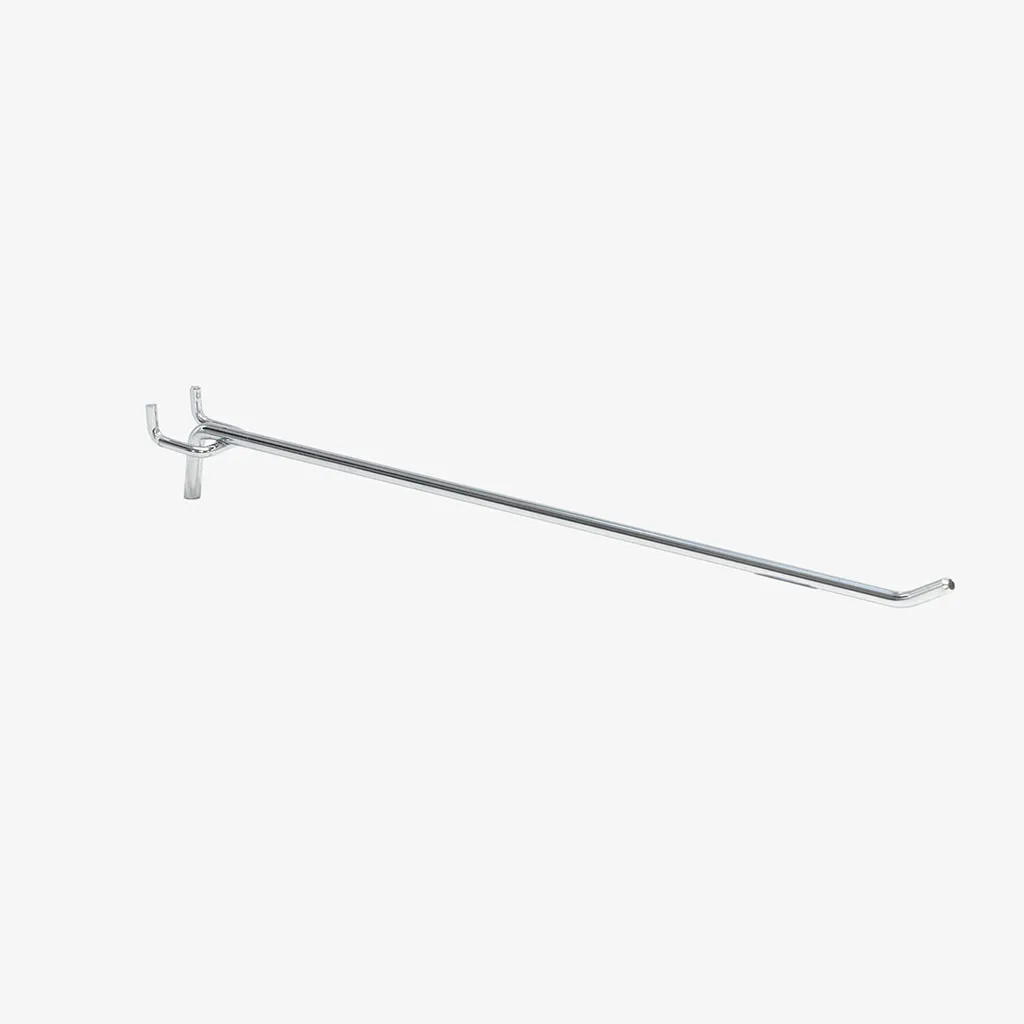
Single-Prong Hooks
The most common pegboard hook in retail. A single steel prong extends from a back plate, and products hang directly from the hook. Available in lengths from 50 mm to 300 mm and shorter for lighter packaged goods, longer for bulkier items or when you want to stock multiple units per hook.
- Good for: packaged accessories, hardware, personal care, snack foods, confectionery.
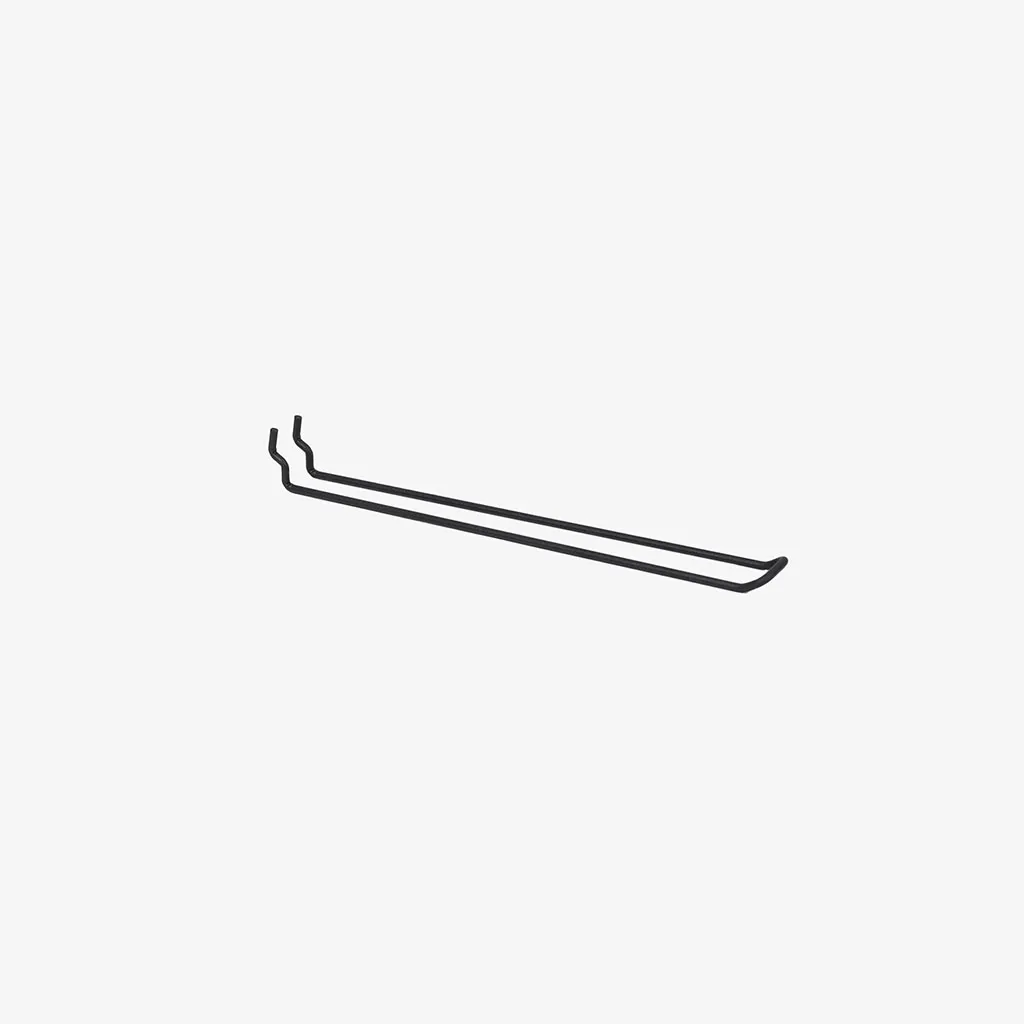
Double-Prong (Twin-Wire) Hooks
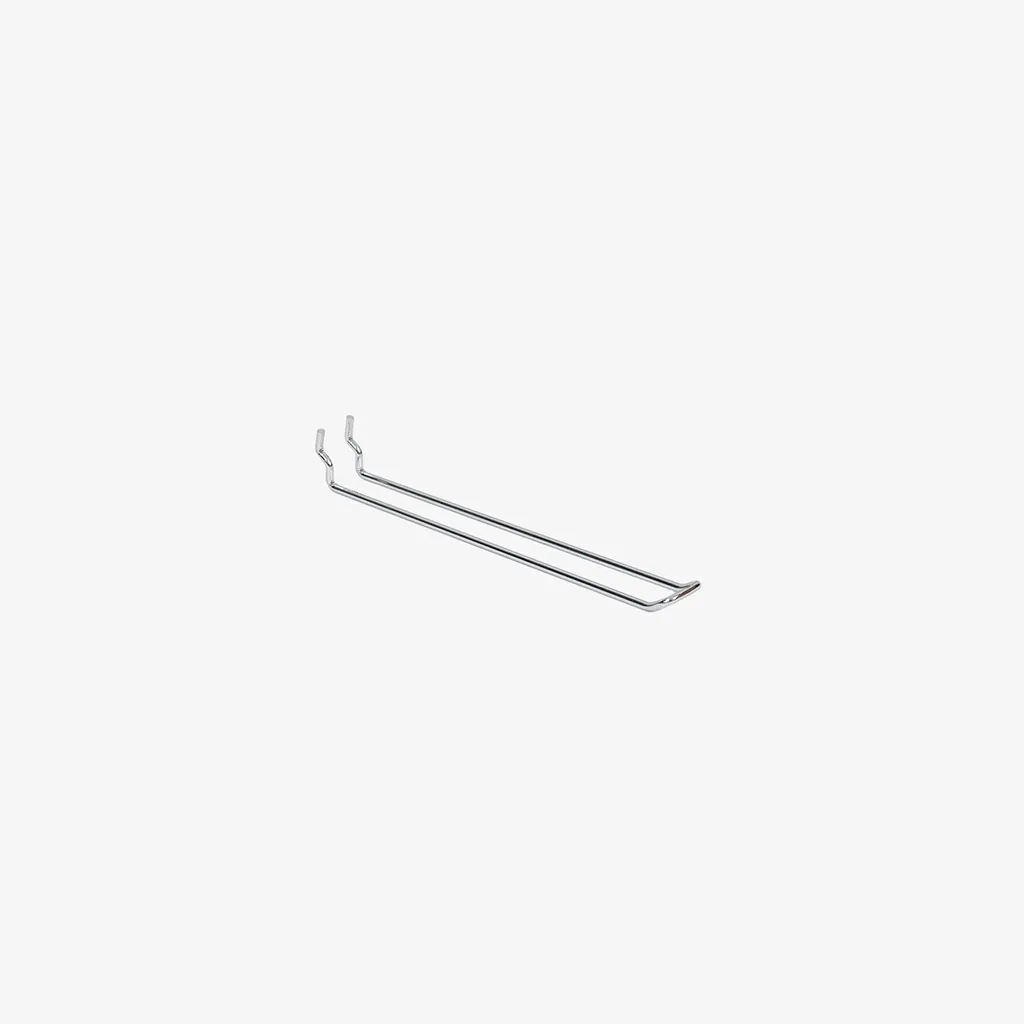
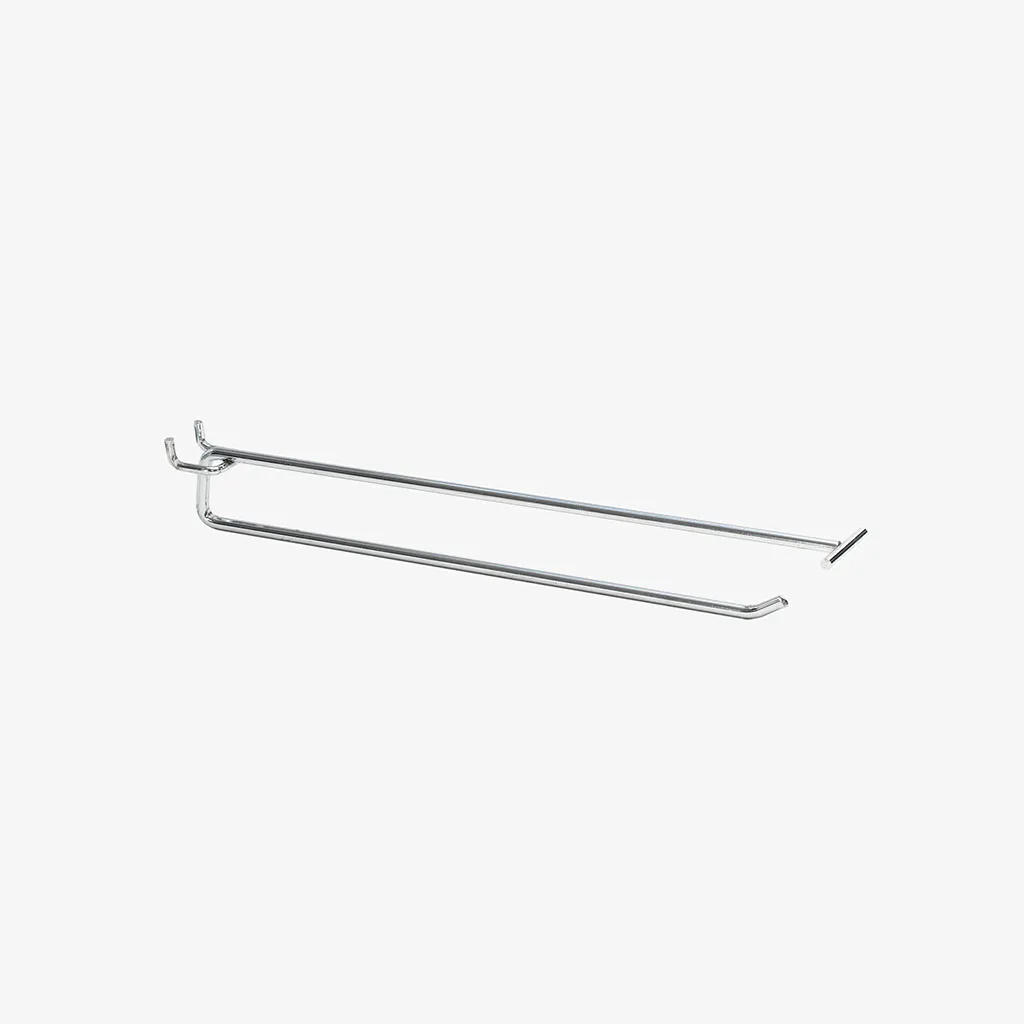
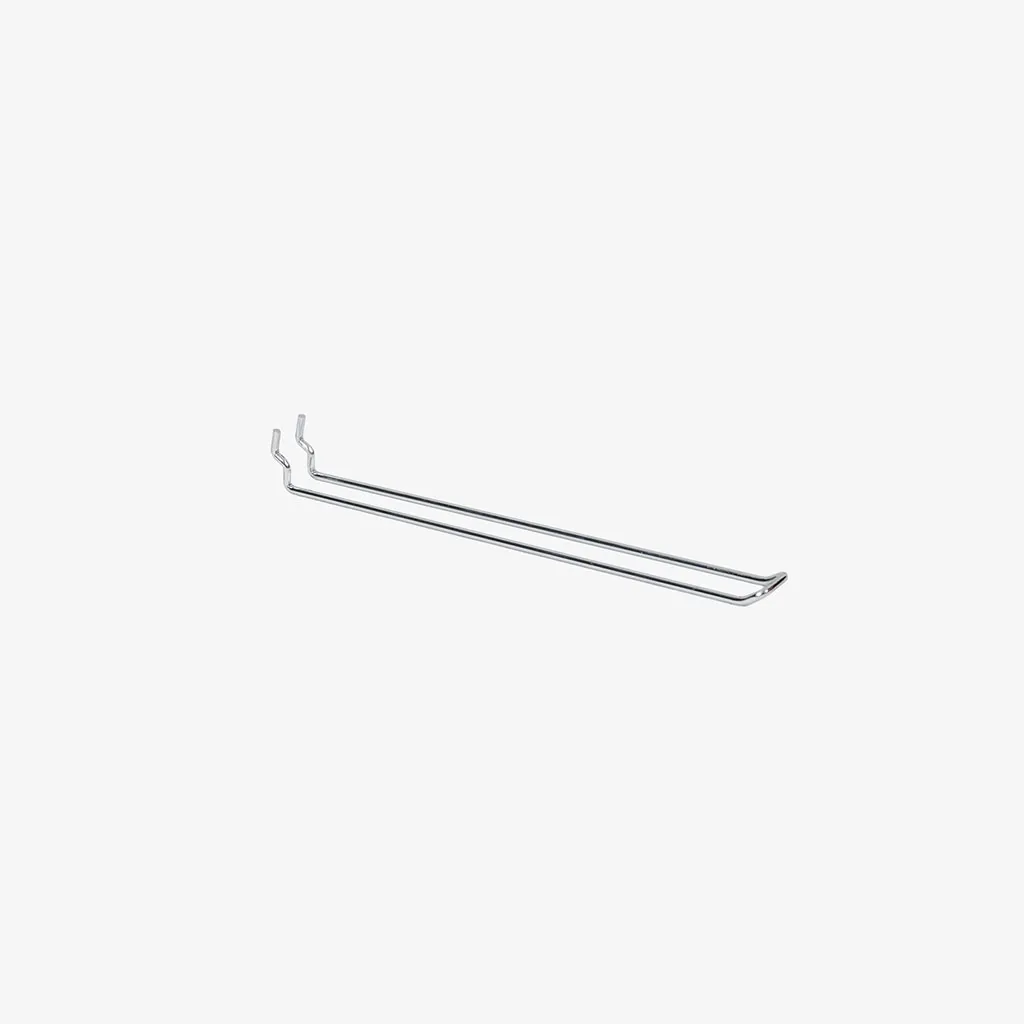
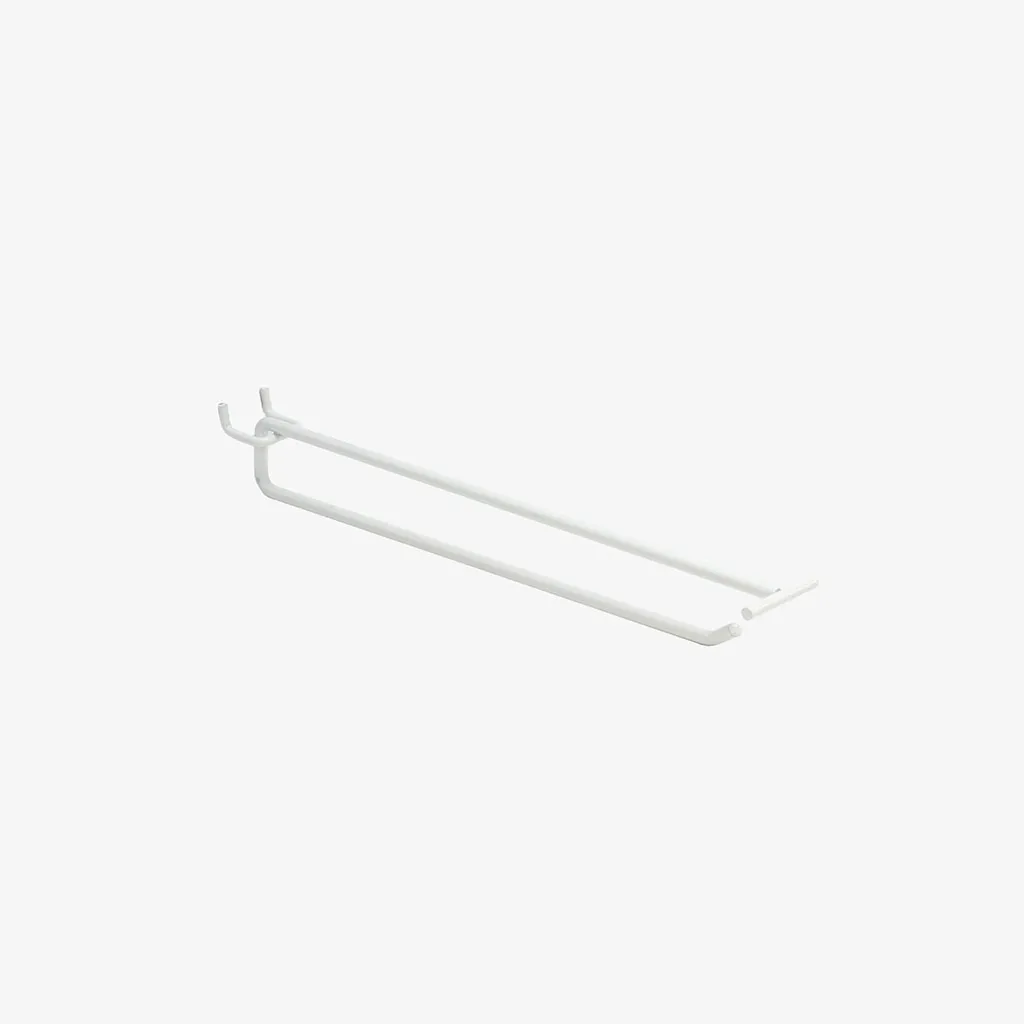
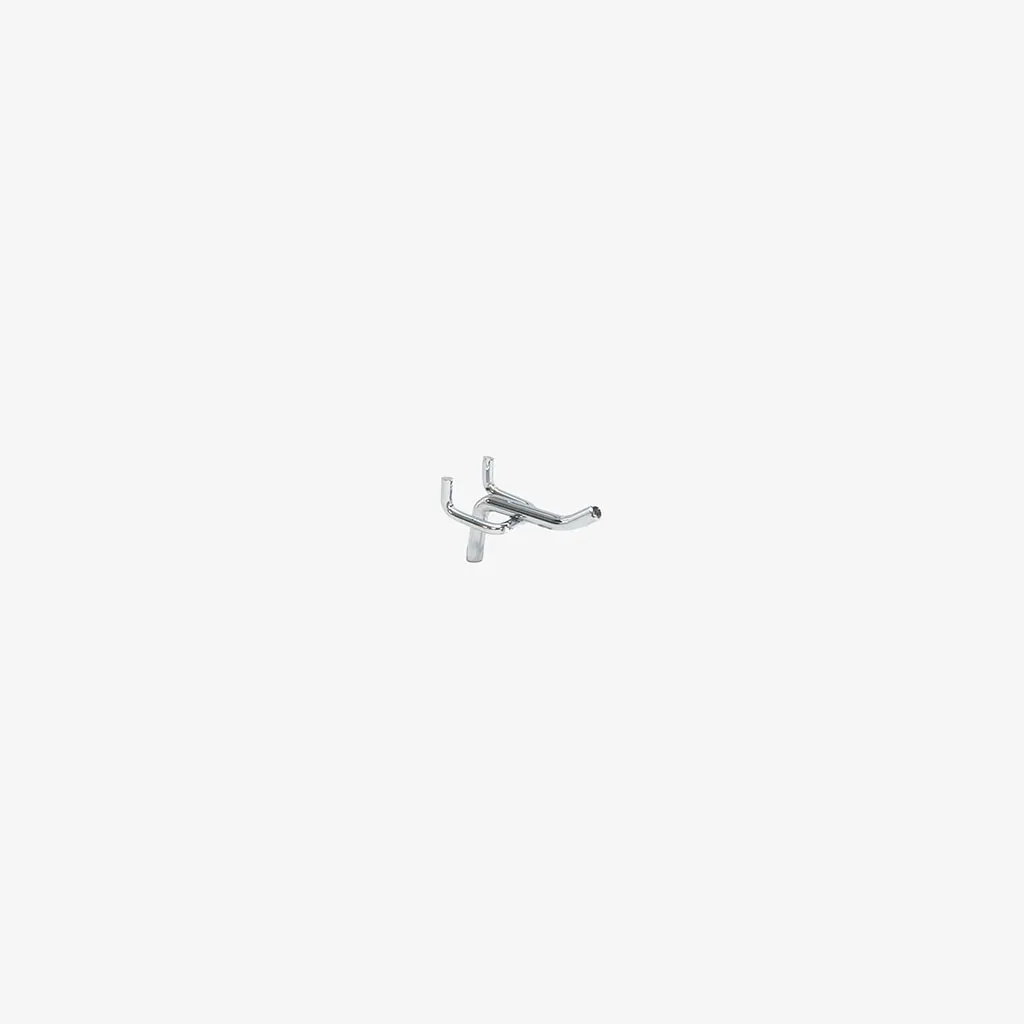
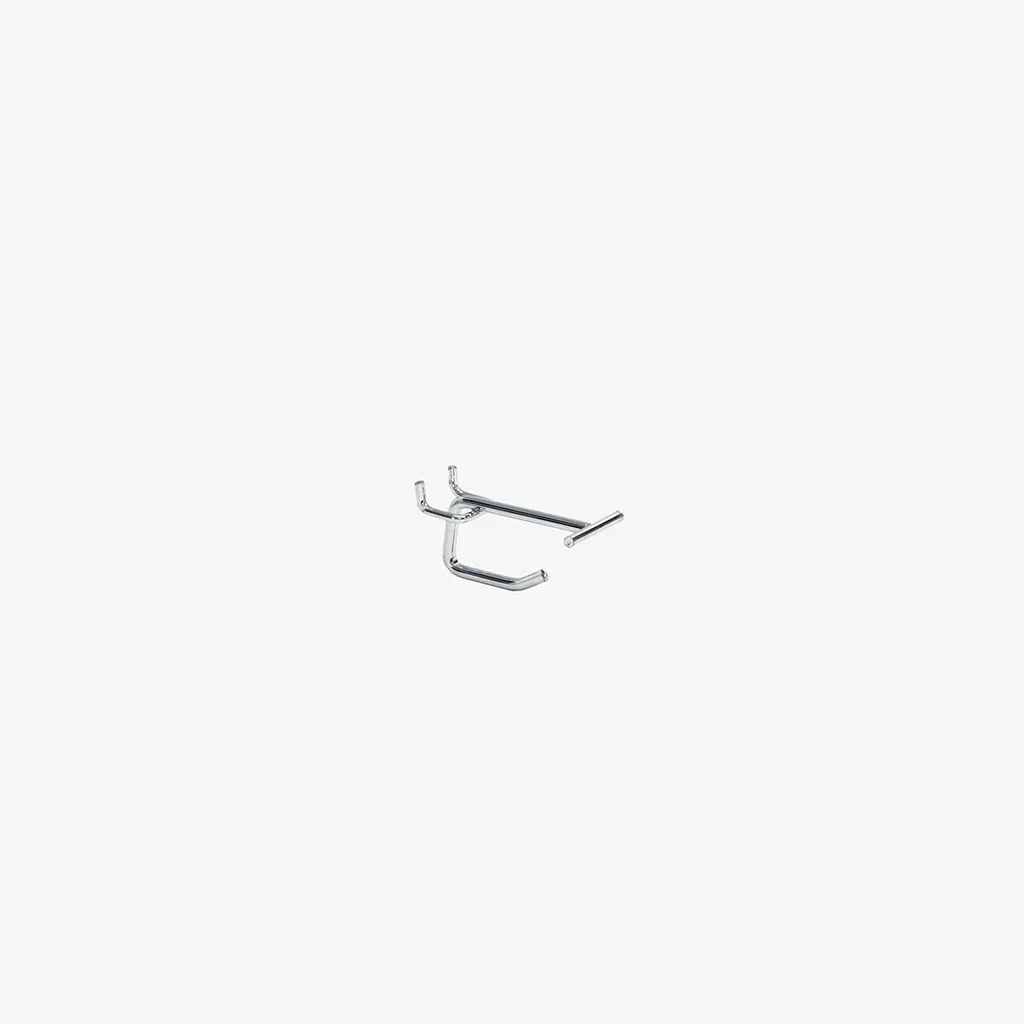
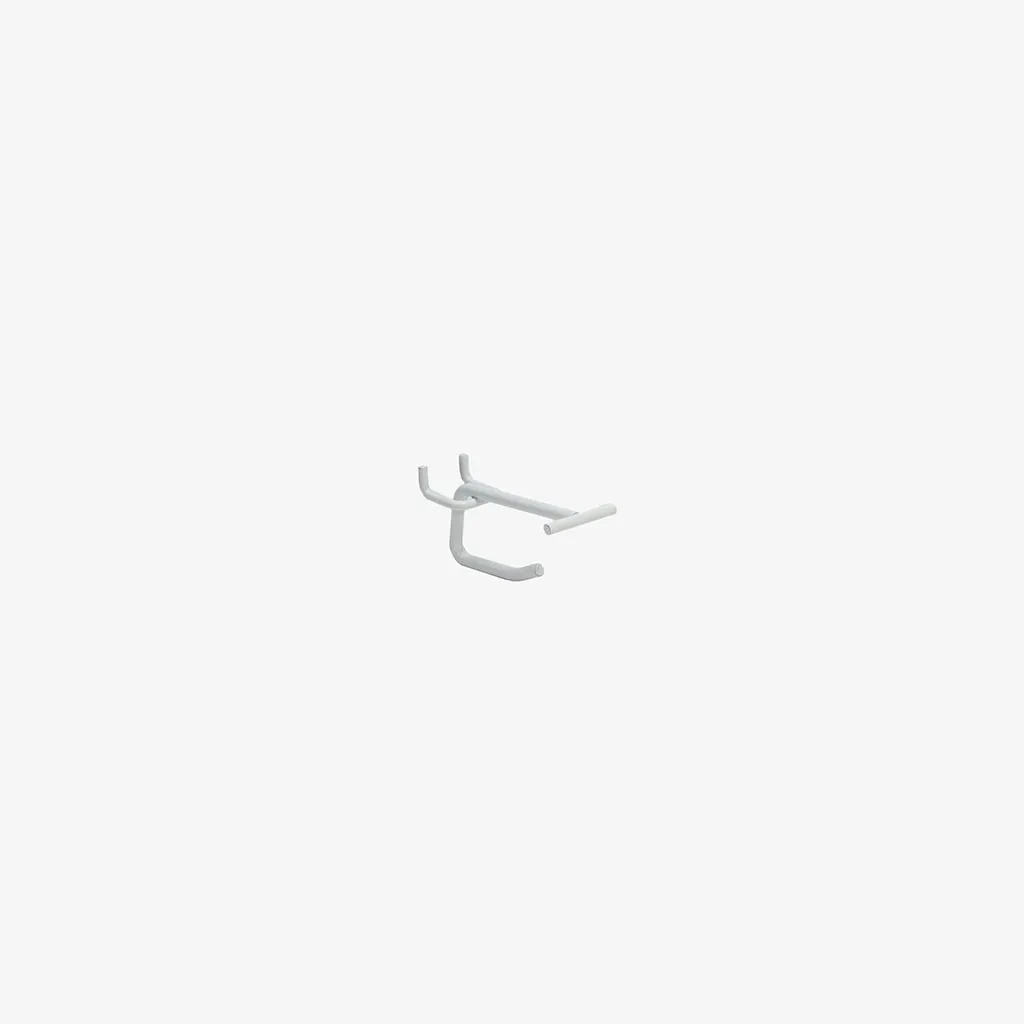
Two parallel prongs instead of one. The wider base gives more support and keeps products, particularly flat-packed or bagged items, sitting upright and stable rather than twisting sideways.
The double-prong format is the standard choice for supermarket and convenience store layouts.
- Good for: bagged products, flat-packed goods, anything that needs to sit face-forward.
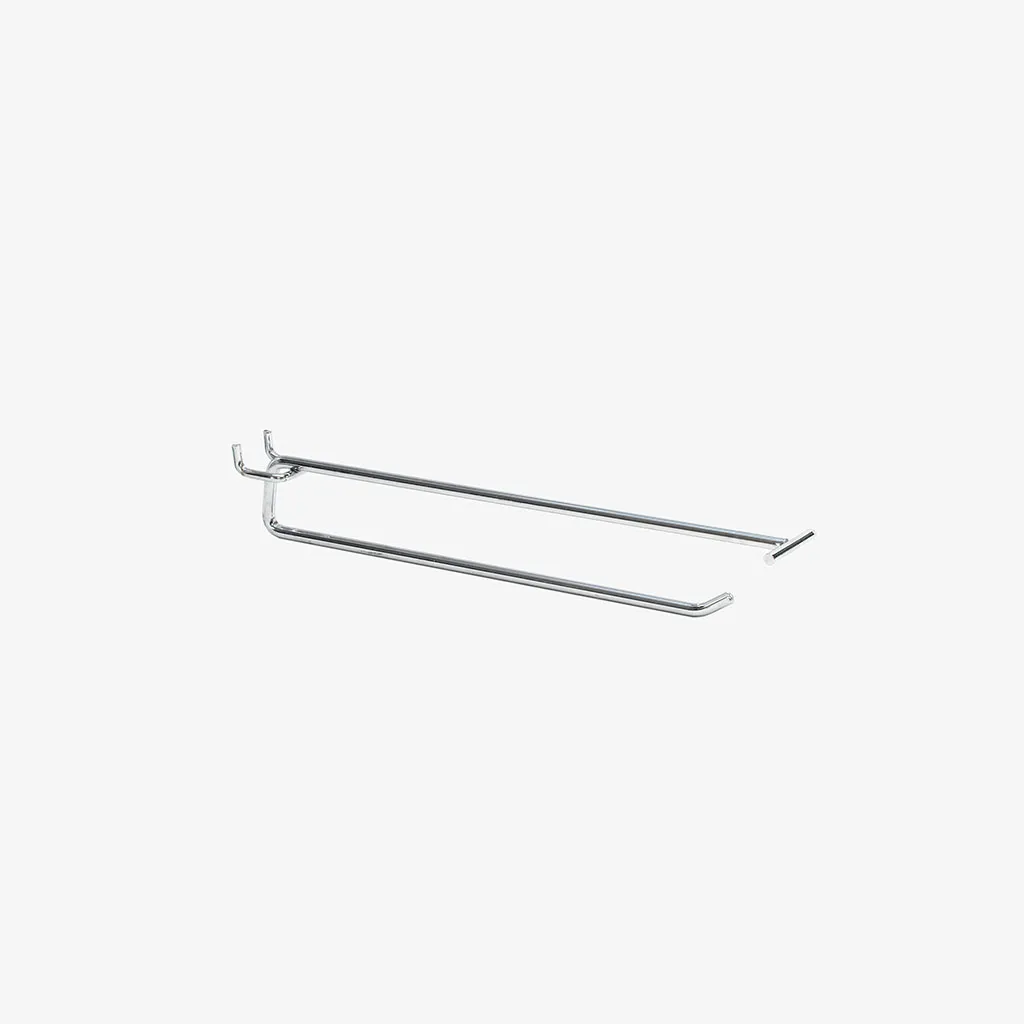
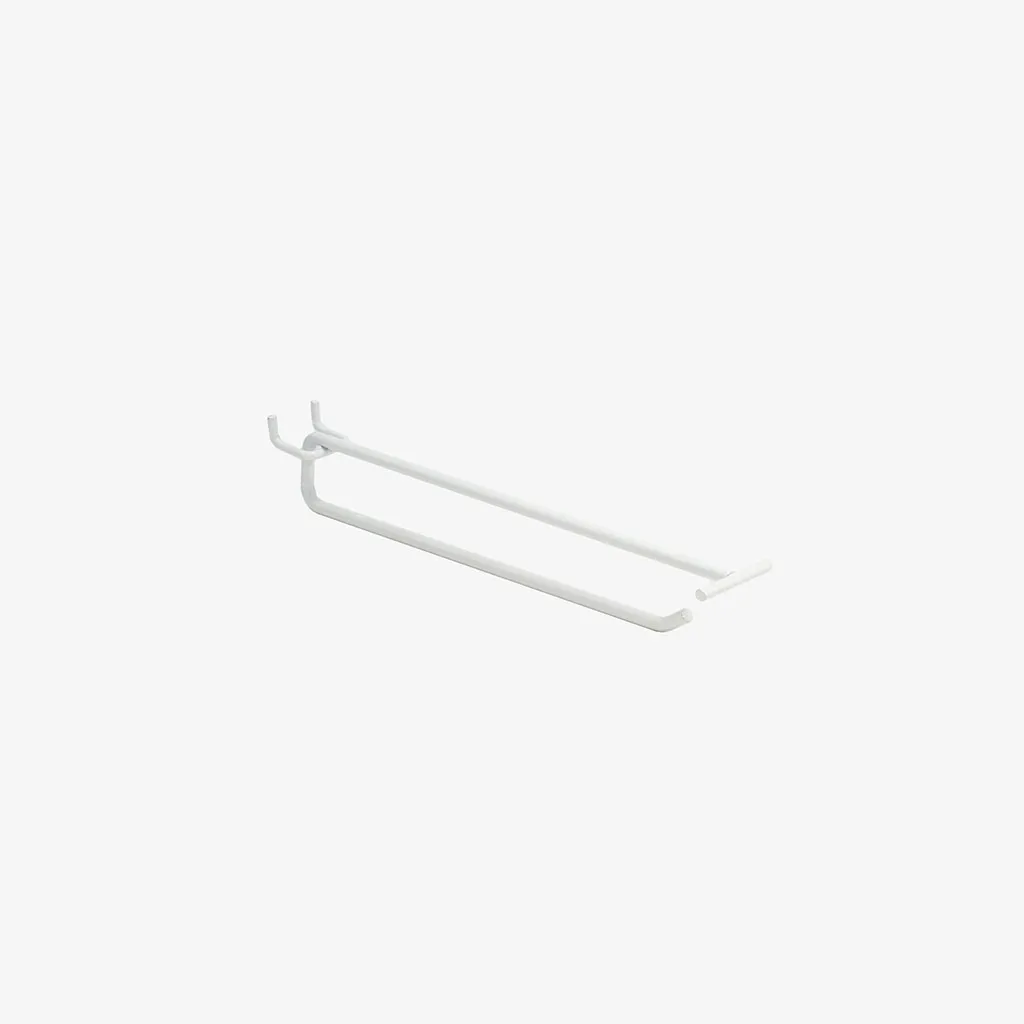
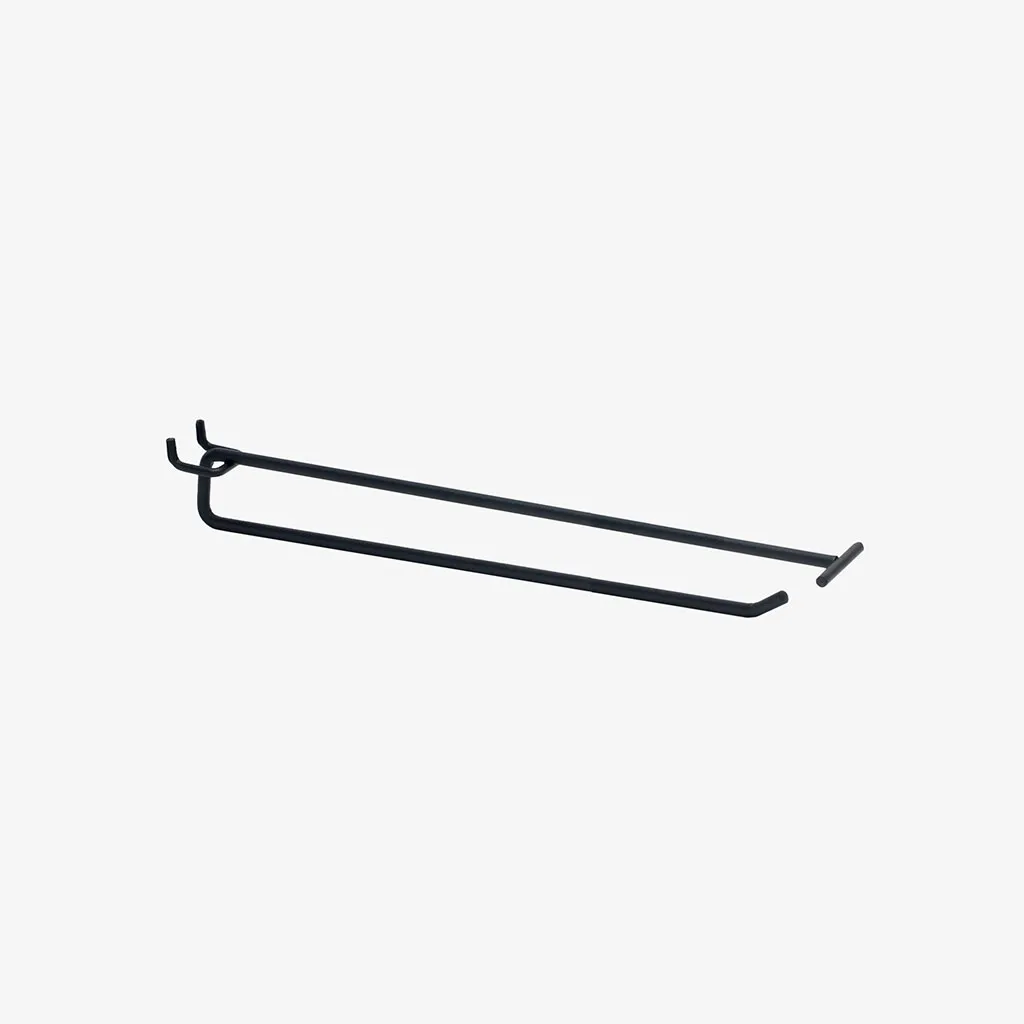
Flip-Scan (Scan/Price Tag) Hooks
A single-prong hook with a small flip-down label holder at the front. The label holder sits at the tip of the hook and flips down so customers can read the price or product name without moving the stock. Widely used in supermarkets and convenience stores where clear pricing across a dense peg board display matters.
- Good for: high-volume hangsell, supermarkets, convenience stores, petrol station forecourts.
Loop Hooks
A closed loop rather than an open prong. Loop hooks are used for products with a hang tab that needs to sit securely – blister packs with punched holes, bags with eyelets, or products that might otherwise slip off a standard open hook.
- Good for: bagged accessories, clothing accessories, stationery, small packaged tools.
Heavy-Duty and Super Heavy-Duty Hooks
Standard retail pegboard hooks are built for packaged goods up to around 3–4 kg per hook. For heavier products – hand tools, power accessories, hardware in bulk packs – you need a heavier gauge wire hook with a reinforced back plate. Heavy-duty hooks typically use 5–6 mm wire versus the 3–4 mm wire on standard hooks.
If you're loading multiple units per hook and the combined weight is significant, heavy-duty pegboard pegs are the right choice. It's not just about the hook holding – it's about keeping the pegboard panel itself from deforming over time.
- Good for: hardware and tool retail, automotive accessories, heavy packaged goods.
Pegboard Price Tag Hooks
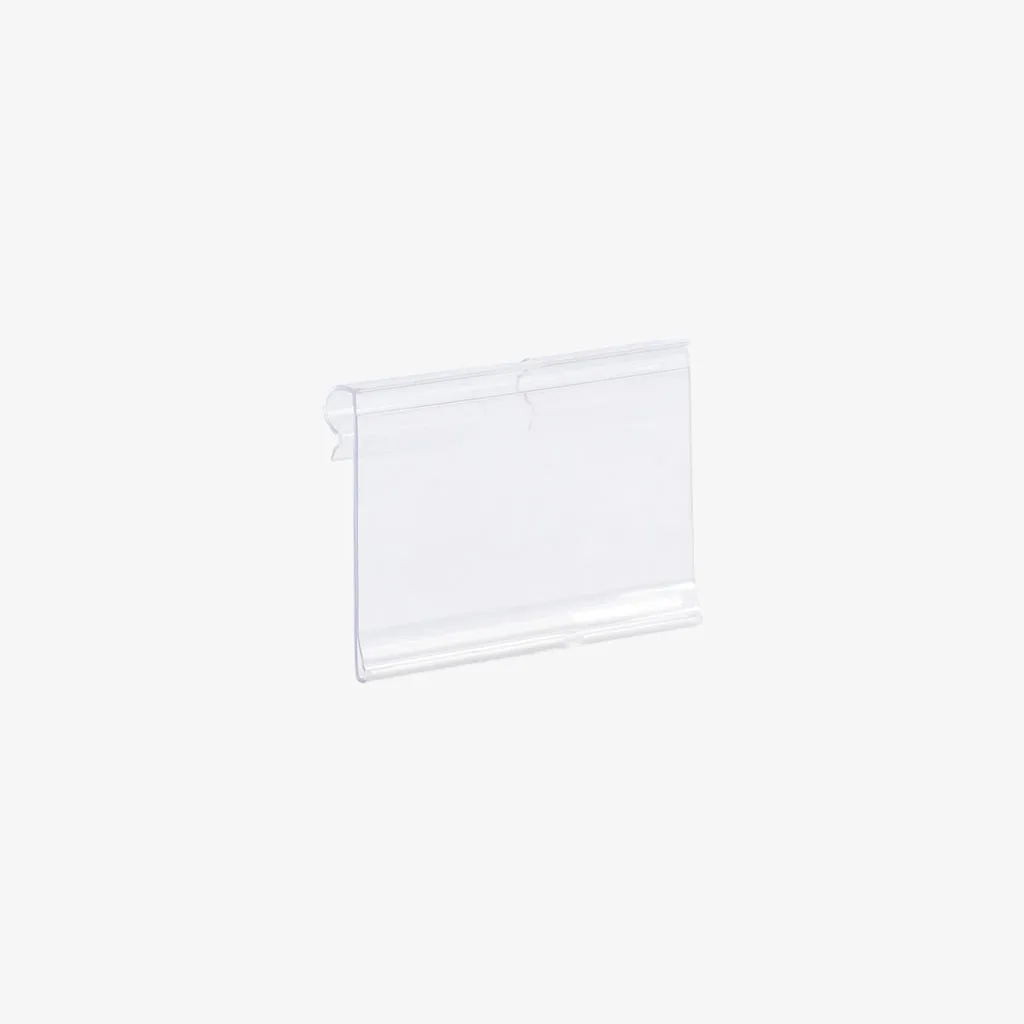
A pegboard price tag hook is simply a pegboard hook with a built-in label holder at the front. The label sits where customers naturally look, making it easy to see pricing and product information without shifting stock around.
They're commonly used in supermarkets, convenience stores, pharmacies, and other high-volume retail environments where clear shelf-edge pricing matters.
All Dinya pegboard price tag hooks are designed to suit standard 25 mm pitch pegboard panels and integrate seamlessly with our wider range of pegboard hooks and accessories.
Compatibility: What Pegboard Hooks Fit Which Panels
The critical spec is hole pitch, which is the spacing between holes on your pegboard panel. The Australian retail standard is 25 mm, and all Dinya pegboard hooks are manufactured to this pitch.
If you're sourcing hooks from multiple suppliers, confirm the hole pitch before ordering. A hook designed for 25 mm pitch panels won't seat correctly in a 50 mm panel; the two pins will either both land in the same hole or miss entirely.
Wire gauge also matters for fit and load. Standard retail hooks typically use 3.6–4 mm wire. Heavy-duty hooks use 5–6 mm wire. Both fit the same 6 mm holes on steel pegboard panels.
Our pegboard hooks are compatible with:
- Dinya volcano pegboard panels (gondola-mounted)
- Dinya flat punch panel pegboard
- Any standard 25 mm center to center pitch steel pegboard panel from other suppliers
If you're building out a full gondola display, our gondola shelving range includes back panels in both volcano pegboard and flat panel configurations, both accepting the same hook range.
What Stores Use Pegboard Hooks
- Hardware and trade retail: The primary use case for heavy-duty hooks. Tools, packaged fixings, electrical accessories, and automotive products all hang well on a dense pegboard display. Steel hooks at the right gauge handle the load without bending or pulling loose.
- Supermarkets and convenience stores: Flip-scan hooks across the top half of a gondola back panel, combined with shelving at the base, is a standard format in grocery and convenience stores. The scan hook's integrated label holder keeps pricing clear in a high-SKU environment.
- Pharmacies and beauty retail: Single-prong and loop hooks for personal care accessories, hair tools, blister-packed supplements, and cosmetics. Usually paired with data strips for clean labelling across a full gondola run.
- Gift and specialty retail: Loop hooks and standard single-prong hooks for cards, packaged gifts, and accessories. Often combined with wire baskets and acrylic shelves on the same panel for a varied, layered display.
Pegboard Hooks vs Slatwall Hooks
Both work. The question is which system you're running.
If your store uses pegboard panels, you need pegboard hooks (the two-pin back plate seats into the round holes of a pegboard panel).
If your store uses a slatwall system, you need slatwall hooks, which are designed to slot into the horizontal grooves of a slatwall panel.
The hooks themselves look similar, but they're not interchangeable. The back plate design is different for each panel type.
If you're comparing pegboard and slatwall as systems, our pegboard display page covers that in detail.
Why Choose Dinya for Pegboard Hooks
We supply retail pegboard hooks and peg board accessories to stores across Australia from our Melbourne warehouse. Standard stock is dispatched within 1–2 business days, and we offer a price match guarantee. If you find the same product in stock at another Australian retailer, we'll match it.
Whether you're fitting out a single gondola or stocking hooks across a full store layout, our team can help you work out the right hook style, length, and quantity.
Frequently Asked Questions
Single-prong hooks have one arm and suit most packaged retail products. Double-prong (twin-wire) hooks have two parallel arms for better stability – particularly useful for flat-packed or bagged products that tend to twist sideways on a single hook.
It depends on product size and how much stock you want on each peg. 100–150 mm suits most standard packaged goods. Go longer (225–300 mm) for bulkier items or high-volume lines where you want more units per facing.
Yes, as long as the panel uses 25 mm center to center hole pitch – the Australian retail standard. Most commercial steel pegboard panels use this spacing. Check your panel spec before ordering if you're unsure.
Flip-scan hooks (also called scan hooks or price tag hooks) are standard pegboard hooks with a small label holder at the front tip. The holder flips down to display pricing or product information. They're the standard choice for supermarkets and convenience stores.
No – pegboard hooks use a two-pin back plate designed for round holes. Slatwall hooks use a different back plate designed for horizontal grooves. They're not interchangeable.
For products over 3–4 kg per hook, use heavy-duty hooks with 5–6 mm wire and a reinforced back plate. Standard retail hooks use 3.6–4 mm wire and aren't designed for sustained heavy loads.
- Search Recommendations:
-
No Recommended Search Found
-


- Shopfittings By Range
- Acrylic Display
- Black on Black Series
- Clearance
- Clothes Racks
- Flexible Queue System
- Glass Display Cabinets
- Glass Shelves
- Gondola Display Shelving
- Double Sided Plain Panel Gondola Shelving Modules
- Double Sided Slatwall Gondola Shelving Modules
- Double Sided Volcano Pegboard Gondola Shelving Modules
- Single Sided Metal Slatwall Gondola Shelving Modules
- Single Sided Plain Panel Gondola Shelving Modules
- Single Sided Volcano Pegboard Gondola Shelving Modules
- Gondola Display Shelving Components
- Gondola Shelving Accessories

- Hanging Accessories
- Pegboards
- Pegboard Hook and Accessories
- Shop Counters
- Slatwall and Pegboard Baskets
- Slatwall Accessories
- Slatwall Extrusions and Trims
- Slatwall Gondolas
- Slatwall Hooks
- Slatwall Panels
- Slatwall Shelving and Brackets
- Wood Slat Wall
- New Products
- Shopfittings By Industry
- Inspiration & Ideas
- Dinya Digital
- Resources
- Custom Shopfitting Solutions
- Case Studies
- Blogs
- About Us
- Contact Us